
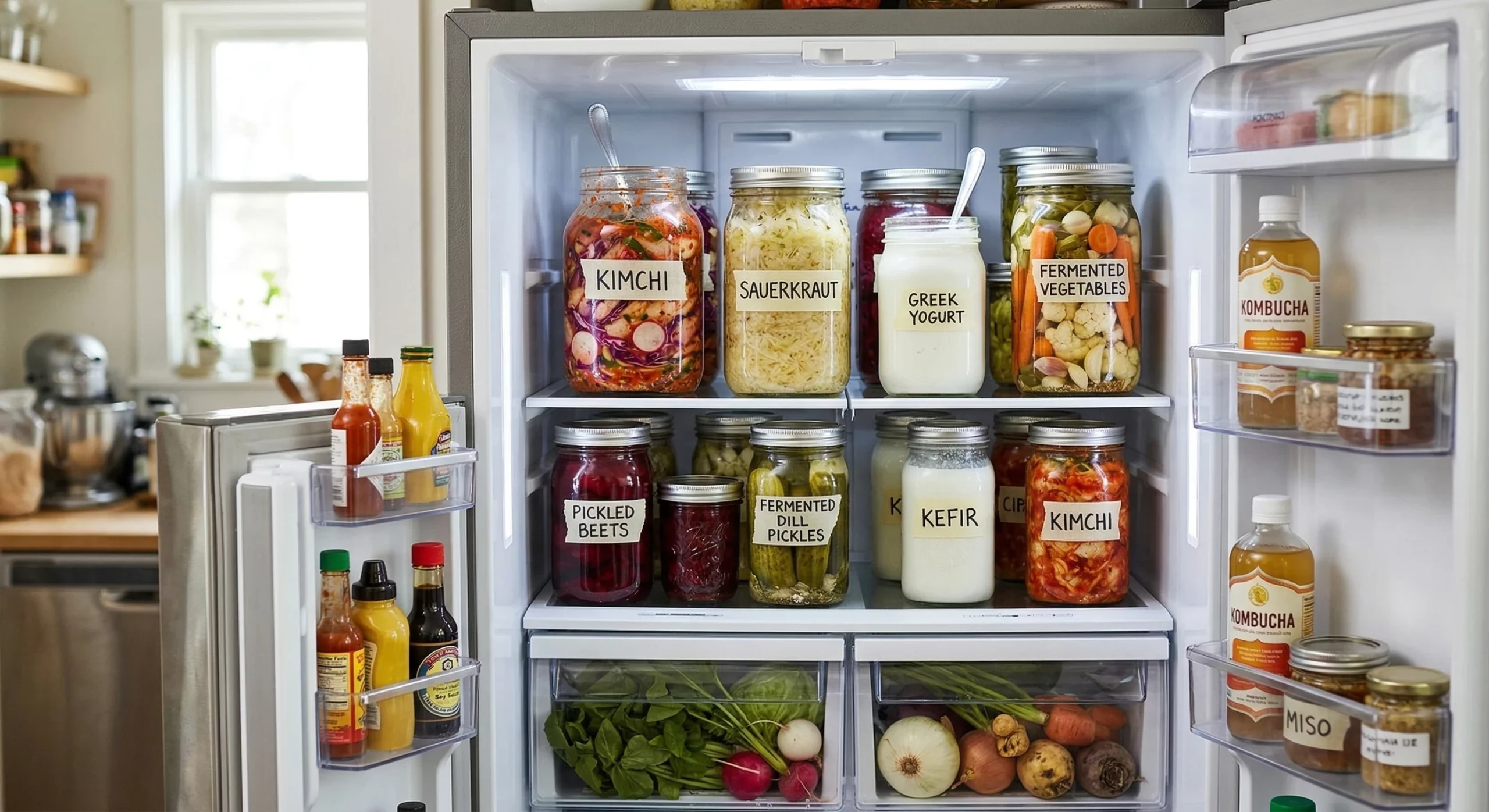
How to Store Fermented Foods (Fridge, Shelf & Long-Term Guide)
Once you’ve made your first batch of fermented food, the next question usually comes pretty quickly:
“How do I store this properly?”
It’s a fair question, because storage plays a big role in how your ferment turns out over time.
Do you leave it on the bench? Put it straight in the fridge? How long does it last?
The good news is, once you understand a few basic principles, storing fermented foods is straightforward.
In this guide, I’ll walk you through exactly how to store your ferments so they stay safe, taste good, and last as long as possible.
Why Storage Matters More Than You Think
Fermentation doesn’t just stop once your food reaches the flavour you like.
It keeps going.
Even after your sauerkraut, pickles, or yogurt taste “ready,” the bacteria are still active. They’ll continue to slowly change the flavour, texture, and acidity over time.
Storage is how you control that process.
By changing the temperature and environment, you can:
- Slow fermentation down
- Preserve flavour
- Extend shelf life
If you don’t store your ferments properly, they can become too sour, too soft, or in some cases, spoil.
The Two Main Storage Options
When it comes to storing fermented foods, you really have two main choices:
- Room temperature (short-term)
- Refrigeration (long-term)
Each has its place, depending on what stage your ferment is at.
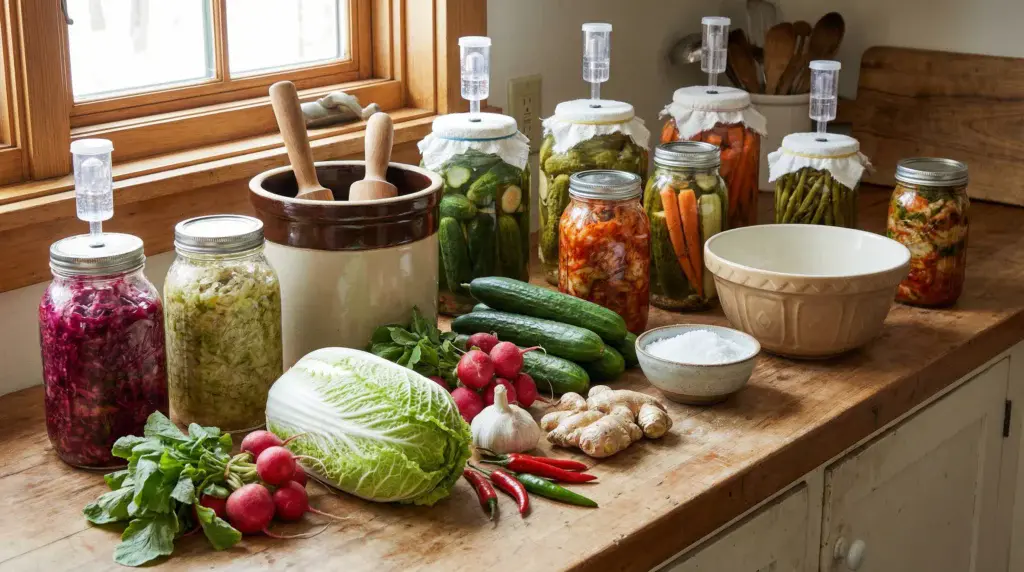
Storing Ferments at Room Temperature
This is where fermentation actually happens.
When your jar is sitting on the bench, the bacteria are active and working. This is what develops flavour and acidity.
During this stage:
- Keep your jar out of direct sunlight
- Maintain a stable room temperature
- Make sure everything stays submerged
Most vegetable ferments will stay at room temperature for:
- 3 to 10 days
This depends on:
- Temperature
- Salt levels
- Your taste preference
If you’re unsure about the fermentation process itself, it’s worth reviewing the basics:
Beginner’s Guide to Fermentation
When to Move Your Ferment to the Fridge
Once your ferment tastes how you like it, that’s the time to move it.
There’s no exact “perfect day” — it comes down to taste.
As a general guide:
- Mild flavour → move earlier
- Strong, tangy flavour → leave longer
Once it’s in the fridge:
- Fermentation slows down significantly
- Flavour stabilises
- Texture holds up better
This is where most ferments should live long-term.
How to Store Fermented Foods in the Fridge
Refrigeration is the simplest and most reliable way to store fermented foods.
Here’s what to do:
- Keep your ferment sealed
- Make sure vegetables remain submerged
- Use clean utensils when serving
Cold temperatures slow the activity of bacteria but don’t completely stop it.
That means your ferment will still develop slowly over time, but much more gradually.
How Long Do Fermented Foods Last?
This depends on the type of ferment and how it’s stored, but generally:
- Vegetable ferments → weeks to months
- Sauerkraut → several months
- Yogurt → 1–2 weeks (best quality)
The key thing to understand is that fermented foods don’t suddenly “go bad” like fresh food.
Instead, they gradually change:
- Flavour becomes more sour
- Texture softens
- Aroma becomes stronger
As long as they’re stored properly, they usually remain safe to eat.
Can You Store Ferments at Room Temperature Long-Term?
Technically, yes — but it’s not recommended for beginners.
Leaving ferments at room temperature for extended periods will:
- Continue fermentation
- Make flavours increasingly strong
- Soften textures
In traditional settings, some ferments are stored this way, but it requires more control and experience.
For most people, especially when starting out: The fridge is the best option
Keeping Your Ferments Safe During Storage
Storage and safety go hand in hand.
A well-stored ferment should:
- Stay submerged under liquid
- Have a clean, sour smell
- Show no signs of unusual mould
If something doesn’t look or smell right, it’s better to be cautious.
If you’re unsure what to look for, this guide will help:
How to Identify Contamination in Food
And for a full overview of safe practices:
Common Storage Mistakes
Most issues with fermented foods happen after the fermentation stage, not during it.
Here are a few things to watch out for.
Letting food rise above the liquid
This is one of the most common mistakes.
If vegetables are exposed to air:
- They’re more likely to develop mould
- The ferment becomes less stable
Always keep everything submerged.
Not sealing the jar properly
Once fermentation is complete and in the fridge, your jar should be sealed.
This:
- Keeps contaminants out
- Helps maintain flavour
Using dirty utensils
Every time you take food out of the jar, you’re introducing something into it.
Always use clean utensils
It’s a simple habit that helps prevent problems.
Leaving it too long at room temperature
If you forget about a ferment on the bench, it won’t necessarily be unsafe, but it can:
- Become overly sour
- Lose its texture
Moving it to the fridge at the right time makes a big difference.
Storing Different Types of Fermented Foods
Not all ferments behave the same way.
Vegetable Ferments
- Store in the fridge once ready
- Keep submerged
- Last for months
These are the most forgiving.
Sauerkraut
Sauerkraut stores extremely well:
- Can last several months refrigerated
- Flavour continues to develop slowly
If you want to make your own, see:
How to Make Sauerkraut at Home
Yogurt
Yogurt is a bit different:
- Always store in the fridge
- Best consumed within 1–2 weeks
If you’re making your own:
Can You Freeze Fermented Foods?
You can freeze fermented foods, but it’s not usually recommended.
Freezing:
- Stops fermentation completely
- Can affect texture
- May reduce beneficial bacteria
If your goal is gut health, refrigeration is the better option.
Building a Simple Routine
Once you’ve made a few batches, storage becomes second nature.
A simple routine looks like this:
- Ferment at room temperature
- Taste after a few days
- Move to the fridge when ready
- Keep everything clean and submerged
That’s all you need.
Where to Go Next
Once you understand storage, you’ve covered one of the key parts of fermentation.
From here, you can keep building your skills with:
Final Thoughts
Storing fermented foods doesn’t need to be complicated.
Most of the time, it comes down to a few simple habits:
- Move it to the fridge when it tastes right
- Keep it submerged
- Keep it clean
That’s enough to keep your ferments safe, stable, and enjoyable.
Like everything with fermentation, it gets easier with experience.
Once you’ve done it a few times, you won’t need to think about it much at all.