
How to Identify Contamination in Fermented Foods (What’s Safe and What Isn’t)
If you’re new to fermentation, seeing something unusual in the jar can be enough to make you want to throw the whole batch out.
A white film on top, cloudy brine, bubbles, strange smells — it’s easy to assume something has gone wrong.
The truth is, many normal signs of fermentation look unusual at first.
Once I learned the difference between harmless changes and real contamination, I stopped throwing away perfectly good batches and became much more confident fermenting at home.
This guide will show you what’s normal, what’s not, and when it’s best to discard a ferment.
How Do You Know if Fermented Food Is Contaminated?
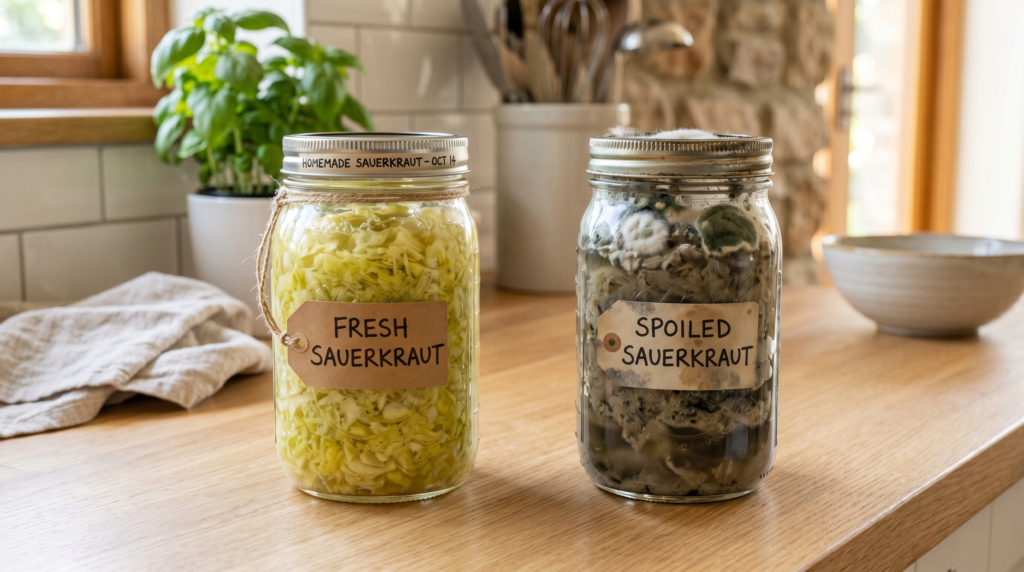
Fermented food may be contaminated if you notice fuzzy mold, bright unusual colours, rotten smells, slimy textures, or obvious spoilage. White kahm yeast, cloudy brine, bubbles, and a sour smell are often normal signs of active fermentation.
Normal Signs of Fermentation (Often Mistaken for Problems)
A lot of beginners throw away good batches because they mistake normal fermentation activity for contamination.
These signs are usually completely normal:
Bubbles
Bubbles are one of the best signs fermentation is active. Beneficial bacteria produce gas as they work.
Cloudy Brine
Cloudy liquid often means bacteria are active in the brine. This is common in sauerkraut, pickles, and vegetable ferments.
Sour or Tangy Smell
Ferments should smell pleasantly sour, acidic, or slightly funky.
Vegetables Softening Slightly
Some softening is normal over time, especially in warmer conditions.
White Surface Film (Kahm Yeast)
This is commonly mistaken for mold.
Kahm yeast is usually harmless, though it can affect flavour if left too long.
Signs of Contamination (When to Throw It Out)
If you notice the following, it’s safest to discard the batch.
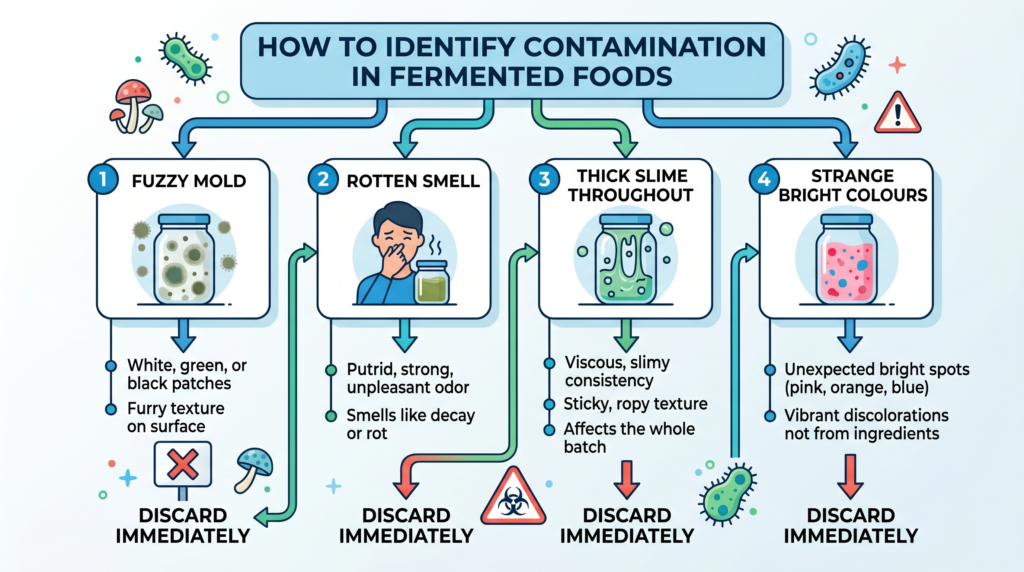
Fuzzy Mold
Any fuzzy growth is a bad sign.
Especially if it is:
- green
- black
- blue
- pink
- hairy or raised
Once mold forms, it can spread below the surface even if only visible on top.
Rotten or Putrid Smell
Ferments should smell sour, not rotten.
If it smells like decay, garbage, or something clearly unpleasant, trust that instinct.
Thick Slime Throughout
Some vegetables naturally soften, but a thick slimy texture throughout the jar is a warning sign.
Strange Bright Colours
Unexpected bright orange, blue, or black growth should be treated as spoilage.
Kahm Yeast vs Mold (Important Difference)
| Sign | Kahm Yeast | Mold |
|---|---|---|
| Colour | White / cream | Green, black, blue, pink |
| Texture | Flat / powdery | Fuzzy / hairy |
| Smell | Yeasty / neutral | Musty / rotten |
| Safe? | Usually harmless | Discard batch |
I used to throw out batches whenever I saw white film. Once I learned to identify kahm yeast properly, I realised many of them were completely fine.
Why Contamination Happens
Most problems come back to a few simple issues:
Food Not Fully Submerged
Vegetables above the brine are exposed to oxygen, which encourages mold.
Weak Salt Ratio
Too little salt can create an unstable environment. See my full guide on Salt Ratios for Fermentation.
Dirty Equipment
Jars, lids, utensils, and hands should be properly cleaned.
Warm Temperatures
Too much heat can speed spoilage and soften vegetables quickly.
Poor Ingredients
Old or damaged vegetables often lead to weaker results.
How to Prevent Contamination
The easiest way to avoid problems is keeping the process simple.
Use Fresh Produce
Start with good vegetables.
Use the Right Salt Ratio
For most vegetable ferments, 2% to 3% salt works well.
Keep Everything Under Brine
Using proper weights helps. Read Using Weights and Airlocks in Fermentation.
Use Clean Equipment
Wash jars, lids, and tools thoroughly.
Keep Jars Out of Direct Sunlight
A cool stable room temperature area is usually best.
Check Daily
A quick look each day can catch small issues early.
What I Do if I’m Unsure
If I’m ever unsure, I ask:
- Does it smell clean and sour?
- Is there fuzzy growth?
- Is the texture normal?
- Does it look like normal fermentation activity?
If something clearly feels wrong, I don’t risk it.
That approach has saved time and stress.
Frequently Asked Questions
Is white film on fermented vegetables mold?
Not always. It is often kahm yeast, which is usually harmless.
Can I scrape mold off and keep the ferment?
It’s safer to discard the batch if mold is present.
Is cloudy brine normal?
Yes. Cloudy brine is often a normal sign of fermentation.
Why does my ferment smell sour?
A sour smell is common and usually means acids are forming properly.
What colour mold is dangerous?
Any fuzzy green, black, blue, or pink mold means discard the batch.
Where to Go Next
If you’re improving your fermentation results, these will help:
- Salt Ratios for Fermentation (The Only Guide You Need)
- Using Weights and Airlocks in Fermentation
- Beginner’s Guide to Fermentation
- How to Ferment Vegetables at Home
Final Thoughts
Most fermentation “contamination” worries come from not knowing what normal fermentation looks like.
Once you understand the difference between harmless activity and real spoilage, the whole process becomes much easier.
Keep it clean, keep vegetables submerged, use the right salt ratio, and trust your senses.
That’s how confidence in fermentation is built.