
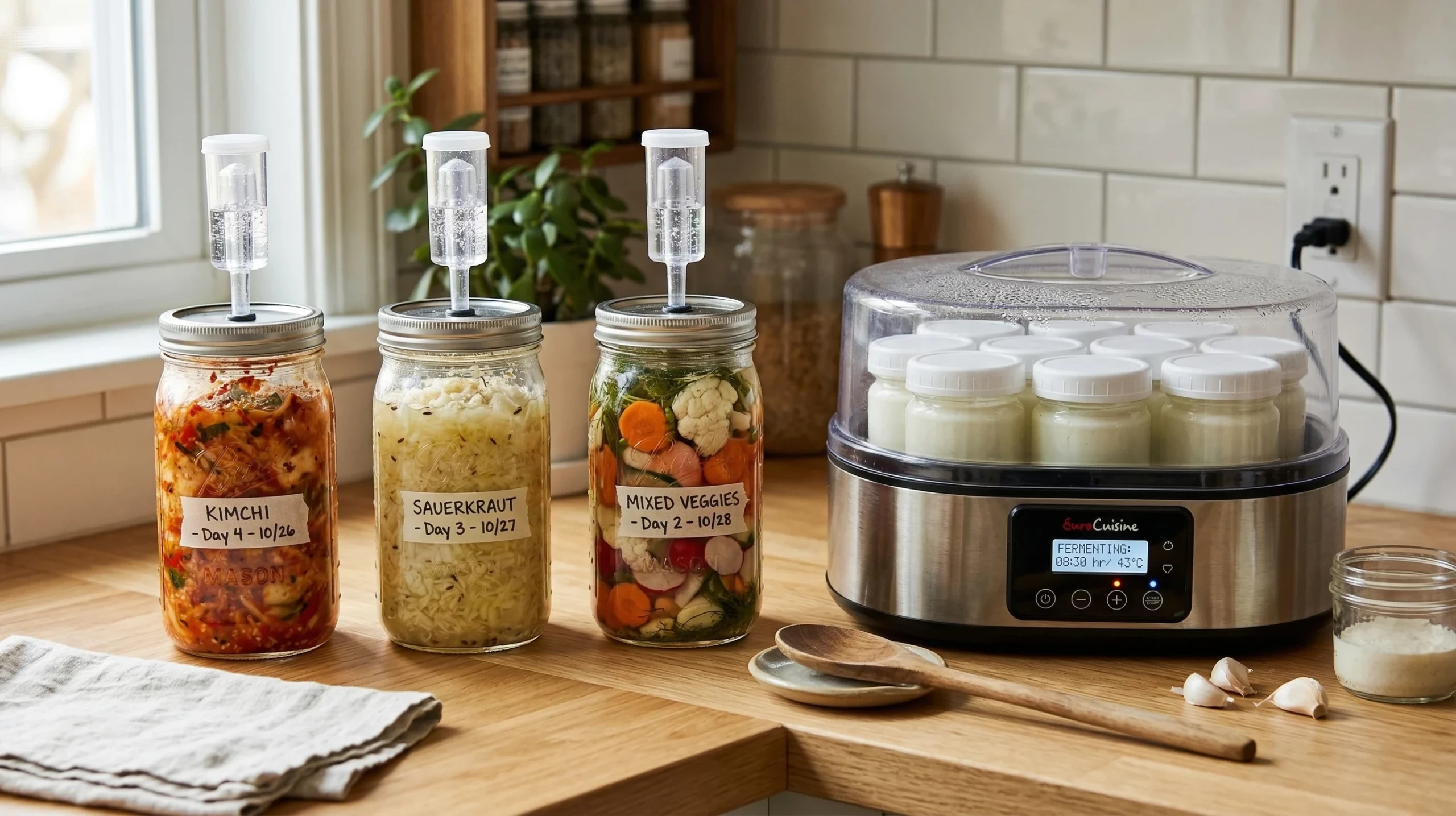
Why Is My Ferment Not Bubbling? (And What to Do About It)
If you’ve got a jar of vegetables sitting on your bench and nothing seems to be happening, you’re not alone.
One of the most common questions people have when they start fermenting is:
“Why isn’t my ferment bubbling?”
You’ve followed the steps, added salt, packed everything into a jar… and then nothing. No fizz, no visible activity, just a jar of vegetables sitting there looking the same as when you started.
It can feel like you’ve done something wrong.
But in most cases, a lack of bubbling doesn’t mean your ferment has failed.
In fact, sometimes it’s completely normal.
Let’s walk through what’s actually going on and what you should look for.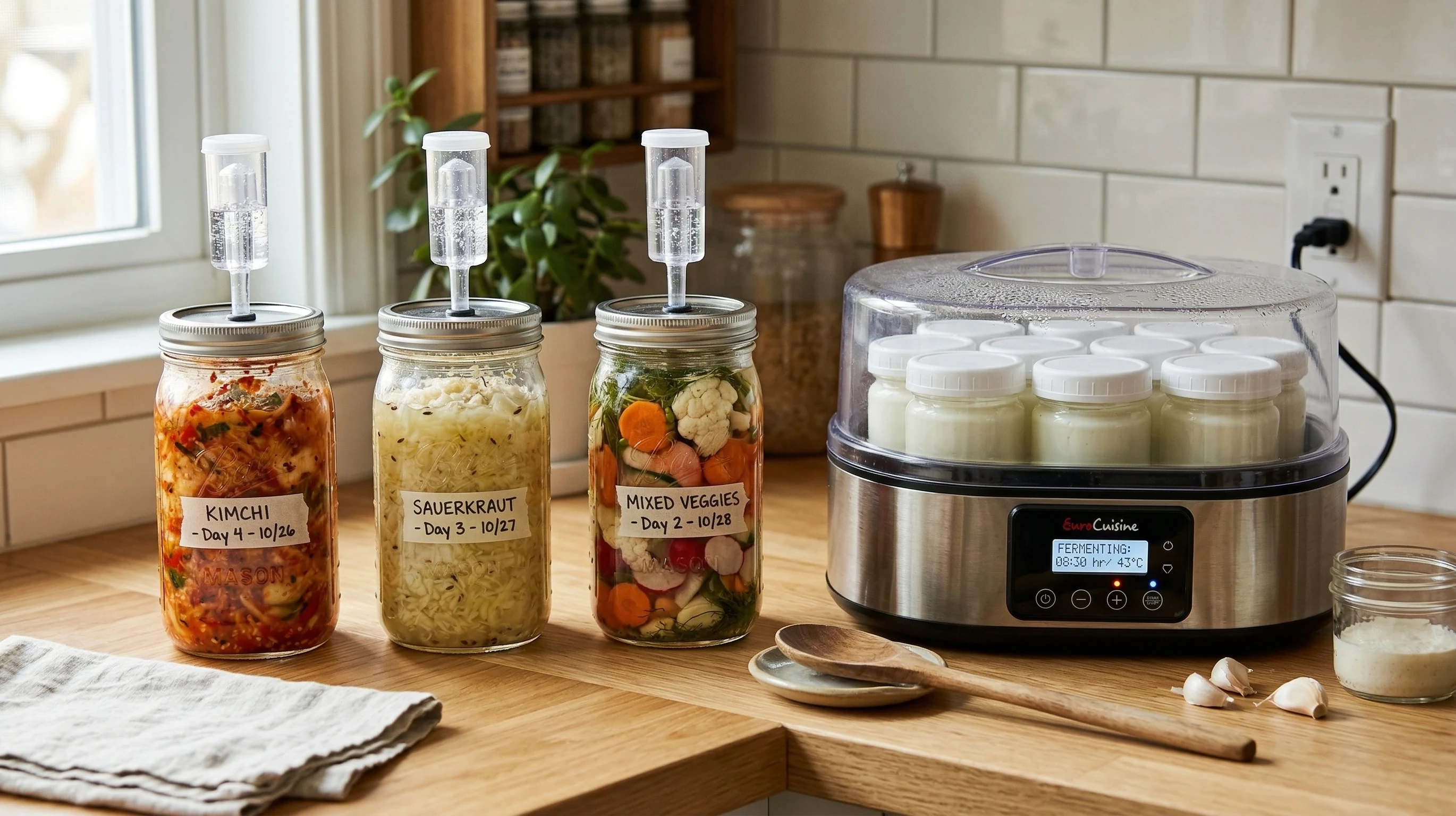
First Things First: Bubbling Isn’t Always Obvious
A lot of beginners expect fermentation to look dramatic — lots of bubbles, movement, maybe even something like a fizzy drink.
But vegetable fermentation is usually much more subtle than that.
Sometimes you’ll see:
- Small bubbles rising
- Tiny pockets of gas
- Slight movement in the liquid
Other times, you won’t see much at all.
That doesn’t mean nothing is happening.
Fermentation can still be working quietly in the background.
If you’re new to how fermentation actually works, it’s worth understanding the basics first:
Beginner’s Guide to Fermentation
Signs Your Ferment Is Working (Even Without Bubbles)
Instead of focusing only on bubbles, look for these signs:
- A slightly sour or tangy smell
- Cloudy liquid
- A change in flavour over time
These are much more reliable indicators than visible bubbling.
If your ferment smells fresh and slightly sour — not rotten — that’s a good sign.
Common Reasons Your Ferment Isn’t Bubbling
If you’re not seeing any activity, there are a few common reasons why.
Temperature Is Too Low
Fermentation slows down in cooler environments.
If your kitchen is on the cooler side, the bacteria are still working — just more slowly.
You might not see bubbling for several days.
👉 Try:
- Moving your jar to a slightly warmer spot
- Keeping it at a stable room temperature
Salt Levels Are Too High
Salt is important, but too much can slow things down significantly.
If your salt ratio is higher than needed, fermentation may still happen — just at a slower pace.
If you’re unsure about your ratios, you can check here:
Vegetables Are Too Clean
This one surprises people.
The bacteria needed for fermentation live naturally on vegetables.
If they’ve been heavily washed, peeled, or treated, there may be fewer bacteria to kick things off quickly.
It doesn’t mean fermentation won’t happen — it might just take longer to get started.
Not Enough Time
This is probably the most common reason.
Fermentation doesn’t always start within 24 hours.
Depending on conditions, it can take:
- 2–3 days before noticeable activity
- Longer in cooler environments
If it’s only been a day or two, give it more time.
Not Enough Liquid
If your vegetables aren’t fully submerged, fermentation can struggle.
The brine is what creates the right environment.
Make sure:
- Everything is covered
- Vegetables are pressed down properly
When You Should Be Concerned
Most of the time, a lack of bubbles isn’t a problem.
But there are situations where you should pay closer attention.
No change after several days
If nothing has changed after 4–5 days:
- No smell
- No cloudiness
- No flavour change
Then something may not be working properly.
Bad smell
Fermentation should smell:
- Fresh
- Sour
- Slightly tangy
If it smells rotten or unpleasant, it’s best to discard it.
Visible mold
Bright colours like:
- Green
- Black
- Pink
These are signs of contamination.
If you see this, don’t try to save it.
If you’re unsure what to look for, this guide will help:
How to Identify Contamination in Food
What You Can Do to Fix It
If your ferment isn’t bubbling and you’re unsure, here are a few simple things you can try.
Move it to a warmer spot
Even a small increase in temperature can help speed things up.
Double-check your salt ratio
If you think you may have added too much salt, you can:
- Leave it longer
- Or start fresh with a measured ratio
Press vegetables down again
Make sure everything is submerged under the liquid.
This alone can make a difference.
Be patient
Most of the time, the best thing you can do is wait.
Fermentation isn’t instant, and it doesn’t always look active.
A Quick Reality Check
This is worth keeping in mind.
Bubbling is not the goal.
Good fermentation is the goal.
You can have a perfectly successful ferment with very little visible bubbling.
If it smells right, tastes right, and looks normal — it’s working.
Building Confidence Over Time
This is one of those things that becomes much easier with experience.
At the beginning, you’re looking for signs that everything is working.
After a few batches, you start to recognise:
- How it smells
- How it tastes
- How it changes over time
And you rely less on visual cues like bubbling.
Where to Go Next
If you want to improve your results, it helps to build a strong foundation.
You can do that here:
Final Thoughts
If your ferment isn’t bubbling, don’t panic.
Most of the time, it doesn’t mean anything is wrong.
Fermentation can be subtle, especially in the early stages or in cooler conditions.
Focus on the bigger picture:
- Smell
- Taste
- Overall changes
That will tell you much more than bubbles ever will.
And like everything with fermentation, it gets easier the more you do it.