
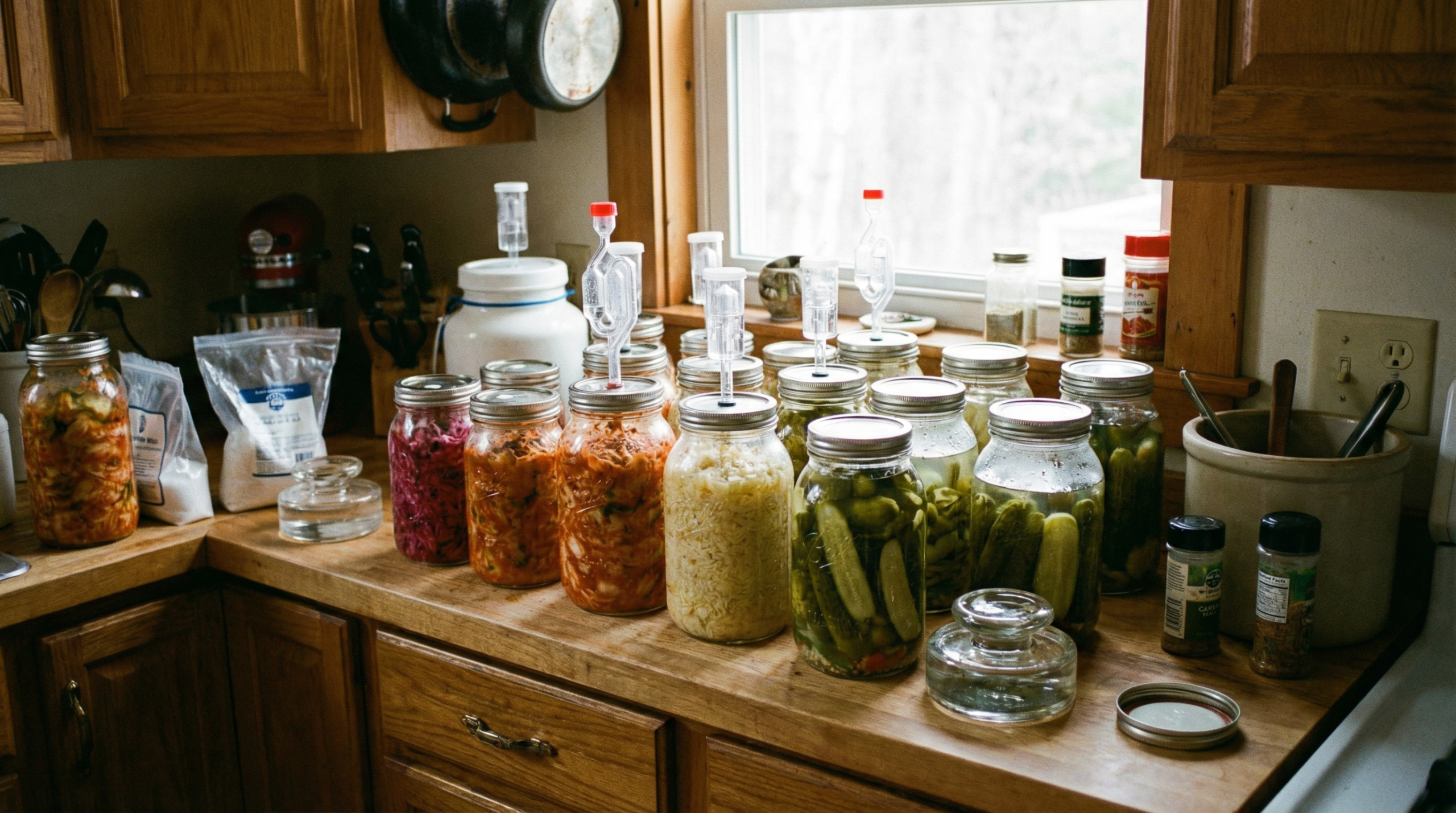
Beginner’s Guide to Fermentation: How to Start Fermenting at Home Safely
What is fermentation and how do you start fermenting at home?
Fermentation is a natural process where beneficial bacteria break down sugars in food, preserving it and creating healthy probiotics. To start fermenting at home, you only need simple ingredients like vegetables, salt, and a clean jar, along with the right conditions for the process to work safely.
Fermentation might sound complicated at first, but once you understand the basics, it becomes a simple and rewarding process that anyone can do in their own kitchen.
If you’ve ever thought about making your own fermented foods but felt a bit unsure where to start, you’re not alone.
Fermentation can look complicated from the outside — jars bubbling away, strange smells, talk of bacteria and cultures — but once you understand the basics, it’s actually one of the simplest and most rewarding things you can do in your kitchen.
The truth is, humans have been fermenting food for thousands of years. Long before fridges and preservatives existed, fermentation was how people kept food fresh, safe, and packed with nutrients.
And today, it’s making a big comeback — not just for preservation, but for health.
Fermented foods don’t just preserve food—they also offer powerful health benefits, including supporting digestion and even helping with weight management. If you’re interested in that side of things, check out our guide on fermented foods for weight loss.
This guide will walk you through everything you need to know to get started safely and confidently.
Quick Start: How to Begin Fermenting at Home
- Choose fresh vegetables (cabbage, carrots, cucumbers)
- Add the correct amount of salt (usually 2–3%)
- Pack into a clean jar and submerge in brine
- Keep at room temperature for several days
- Taste and store in the fridge when ready
If you’re just getting started, these guides will help:
- How to Make Sauerkraut at Home
- Making Yogurt at Home
- Fermentation Safety Tips
- How to Identify Contamination
- Home Fermentation Equipment
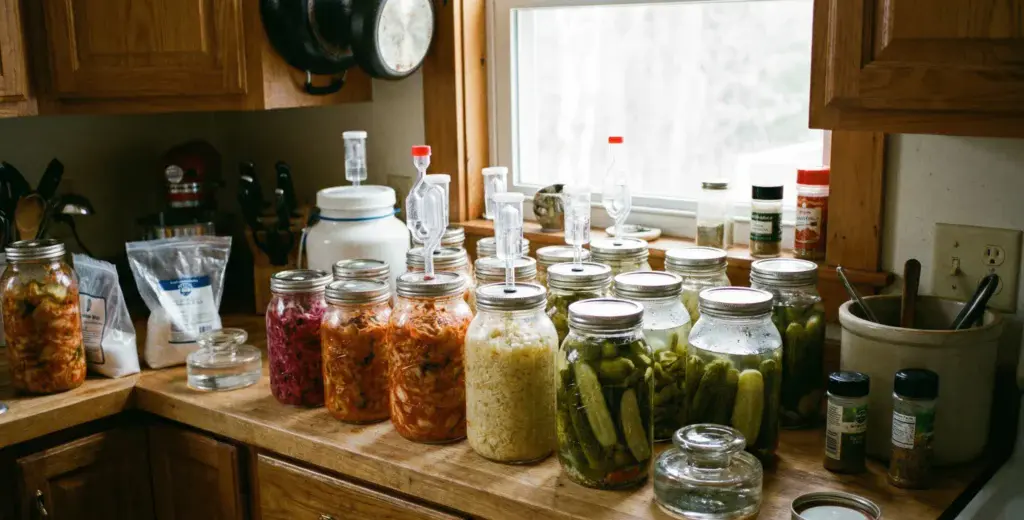
What Is Fermentation?
At its core, fermentation is a natural process where beneficial microorganisms — mainly bacteria and yeast — break down sugars in food.
As they do this, they produce:
- Acids (like lactic acid)
- Gases (like carbon dioxide)
- Alcohol (in some cases)
These byproducts:
- Preserve the food
- Enhance flavour
- Increase nutritional value
That tangy taste you get in sauerkraut or yogurt? That’s fermentation at work.
Why Fermented Foods Are So Good for You
One of the main reasons people get into fermentation today is because of the health benefits.
Fermented foods are rich in beneficial bacteria — often referred to as probiotics — which support your gut health.
A healthy gut microbiome plays a major role in overall health, including metabolism and fat storage. This is why gut health can directly affect weight loss, something many people overlook.
A healthy gut is linked to:
- Better digestion
- Stronger immune function
- Improved nutrient absorption
- Even mental health benefits
Fermentation can also:
- Increase vitamin levels (especially B vitamins)
- Make food easier to digest
- Reduce harmful compounds in certain foods
It’s one of those rare things where something tastes better and becomes better for you.
The Easiest Fermented Foods to Start With
These same foods are also some of the most effective options if your goal is reducing bloating and targeting stubborn belly fat. You can see a full breakdown in our guide on the best fermented foods for belly fat.
If you’re just getting started, don’t overcomplicate it.
Some fermented foods are much more beginner-friendly than others.
1. Sauerkraut
All you need is:
- Cabbage
- Salt
That’s it.
No fancy equipment, no starter cultures — just natural fermentation.
2. Yogurt
A great entry point if you prefer something milder.
You’ll need:
- Milk
- A starter culture (or existing yogurt)
3. Simple Vegetable Ferments
Think carrots, cucumbers, or peppers.
These are done in a saltwater brine and are very forgiving for beginners.
Starting simple builds confidence quickly — and once you see how easy it is, you’ll naturally want to try more.
The Basic Equipment You Need
You don’t need a fully stocked kitchen to start fermenting.
In fact, you can begin with just a few simple items:
- Glass jars (mason jars work perfectly)
- Salt (non-iodized is best)
- Clean water
- A weight (to keep food submerged)
- Optional: airlock lid
That’s enough to make most basic ferments.
You can always upgrade later, but don’t let equipment stop you from starting.
How Fermentation Works (Simple Breakdown)
Let’s strip it back to basics.
When you submerge vegetables in saltwater (or mix with salt), you create an environment where:
- Bad bacteria struggle to survive
- Good bacteria thrive
These beneficial bacteria — mainly lactic acid bacteria — begin to multiply and produce acid.
That acid:
- Preserves the food
- Gives it that signature tangy flavour
- Makes it safe to eat
As long as the environment is right, fermentation is actually very safe.
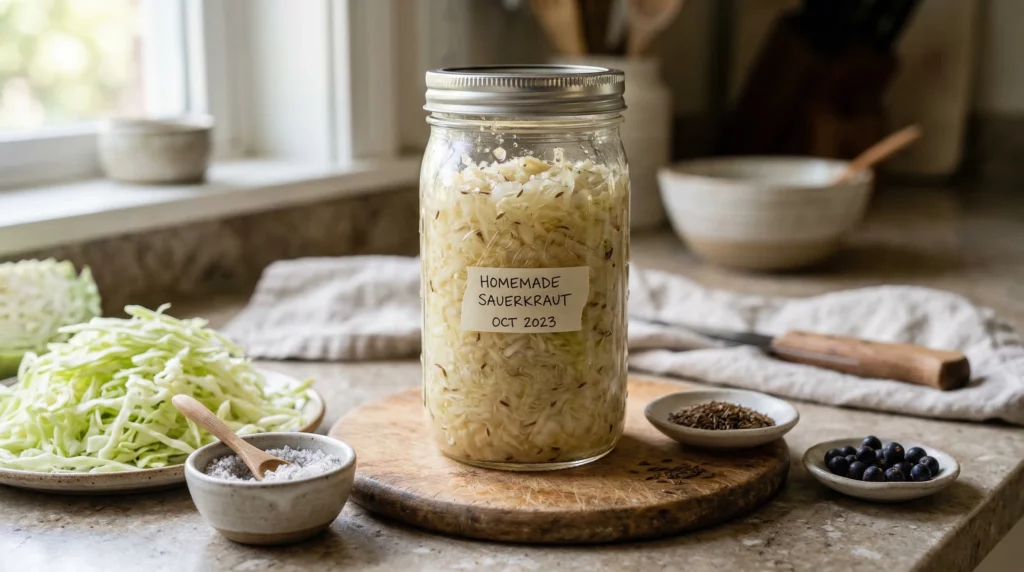
Step-by-Step: Your First Ferment (Simple Sauerkraut)
Here’s a simple way to get started.
Step 1: Prepare your cabbage
Slice it finely and place it in a bowl.
Step 2: Add salt
Use about 2% salt by weight (or roughly 1–2 teaspoons per cabbage).
Step 3: Massage
Work the salt into the cabbage until it starts releasing liquid.
Step 4: Pack into a jar
Press it down tightly so the liquid covers the cabbage.
Step 5: Keep it submerged
Use a weight if needed.
Step 6: Let it ferment
Leave it at room temperature for 5–10 days.
Taste it along the way — once you like the flavour, move it to the fridge.
That’s it. Your first ferment.
Common Fermentation Mistakes (And How to Avoid Them)
Most problems beginners run into are easy to fix once you know what to look for.
Not keeping food submerged
If vegetables are exposed to air, they can spoil.
Always keep everything under the liquid.
Using the wrong salt
Avoid iodized salt — it can interfere with fermentation.
Stick to sea salt or rock salt.
Fermenting too hot
High temperatures can cause overly fast fermentation and bad flavours.
Aim for a cool, stable room temperature.
Giving up too early
Fermentation takes time.
Trust the process — flavour develops over days, not hours.
Fermentation Safety: What You Need to Know
This is where a lot of beginners feel nervous, but once you understand the basics, it’s straightforward.
Signs your ferment is healthy:
- Tangy, slightly sour smell
- Bubbles forming
- Cloudy liquid
Signs something is wrong:
- Foul, rotten smell
- Bright coloured mould (green, black, pink)
- Slimy texture
If in doubt, throw it out — but issues are rare when you follow the basics.
The key rule:
Fermentation should smell sour, not rotten
If you’re unsure whether your ferment is still safe, this guide explains exactly what to look for
How Long Should You Ferment?
It depends on what you’re making and your taste preference.
- 2–3 days → mild flavour
- 5–7 days → balanced
- 10+ days → strong, tangy
There’s no single “perfect” time — it’s about what you enjoy.
How to Store Fermented Foods
Once your ferment reaches the flavour you like:
- Move it to the fridge
- Keep it sealed
- Continue to keep solids submerged
Cold temperatures slow fermentation and help preserve flavour.
Most ferments last weeks to months in the fridge.
How to Make Fermentation a Habit
The easiest way to stick with fermentation is to make it part of your routine.
Start small:
- One jar at a time
- One recipe per week
Once you build confidence:
- Experiment with flavours
- Try different vegetables
- Explore yogurt or kombucha
It quickly becomes second nature — like cooking or meal prep.
Where to Go Next
Once you’ve done your first ferment, you’ve already crossed the hardest part — getting started.
From here, you can expand into:
- Different vegetable combinations
- Fermented drinks like kombucha
- Advanced ferments like miso or kefir
And the more you do it, the more intuitive it becomes.
Final Thoughts
Fermentation might seem like a niche skill, but it’s really just a return to how food has always been prepared.
It’s simple, affordable, and incredibly beneficial for your health.
You don’t need special skills, expensive equipment, or a perfect setup.
You just need to start.
One jar. One recipe. One step at a time.
And before long, you’ll have a kitchen full of living, nutrient-rich foods — made by you.
Using Fermented Foods for Specific Goals
- Learn how to use them for fat loss → Fermented Foods for Weight Loss
- Target stubborn belly fat → Best Fermented Foods for Belly Fat
- Understand the gut-weight connection → Does Gut Health Affect Weight Loss