
Can Fermented Foods Go Bad? (How to Tell What’s Safe)
If you’ve started fermenting at home, this question is going to come up sooner or later:
“Can fermented foods actually go bad?”
It’s a fair concern.
You’ve got jars sitting on the bench or in the fridge, things bubbling away, smells developing… and at some point you start wondering where the line is between normal fermentation and something that’s gone wrong.
The short answer is:
Yes, fermented foods can go bad — but it’s less common than you might think.
And more importantly, once you know what to look for, it’s usually very easy to tell the difference.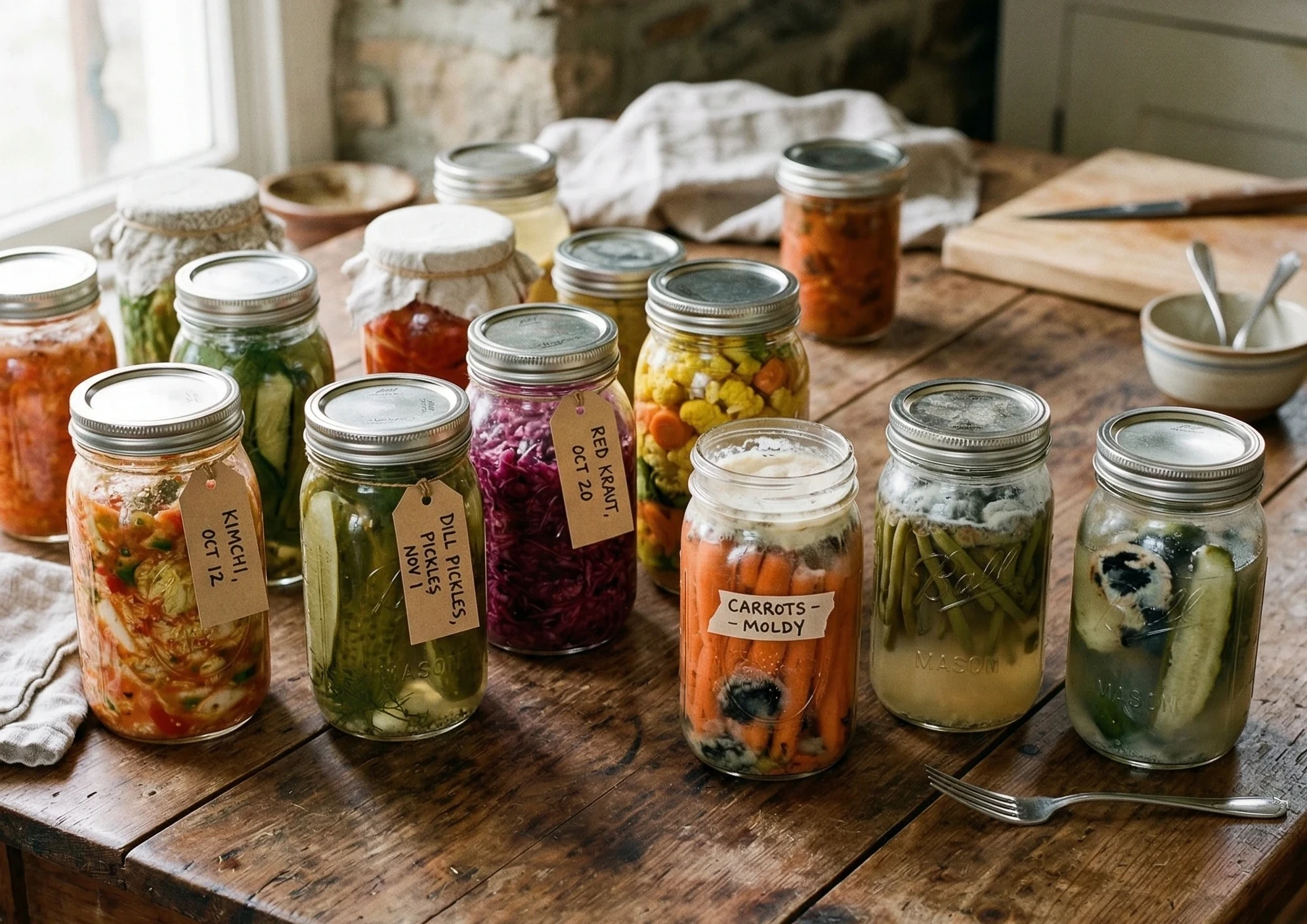
Why Fermented Foods Don’t Spoil Easily
Fermentation is, in many ways, a form of preservation.
When you ferment vegetables, beneficial bacteria produce lactic acid. That acid creates an environment where harmful bacteria struggle to survive.
That’s why foods like sauerkraut and pickles have been stored for long periods throughout history.
So while fresh food can spoil quickly, fermented food is naturally more stable.
If you’re new to how this process works, it’s worth understanding the basics:
Beginner’s Guide to Fermentation
So… Can Fermented Foods Go Bad?
They can, but it usually happens for a reason.
Fermented foods don’t just randomly spoil. When something goes wrong, it’s typically due to:
- Not enough salt
- Vegetables not being submerged
- Contamination from outside sources
- Poor storage conditions
In other words, it’s usually a process issue rather than something unpredictable.
Signs Your Fermented Food Is Safe
Let’s start with the good signs.
A healthy ferment will usually have:
- A sour, tangy smell
- A clean appearance (apart from normal cloudiness)
- A taste that’s slightly acidic
You might also notice:
- Bubbles during fermentation
- Liquid becoming cloudy
These are all normal.
If your ferment smells and tastes pleasantly sour, that’s a strong indication that everything is working as it should.
Signs Your Ferment Has Gone Bad
Now for the important part — what to watch out for.
Strong, unpleasant smell
A healthy ferment should smell sour, not rotten.
If it smells:
- Putrid
- Like decay
- Overpoweringly foul
👉 It’s best to discard it
Visible mold
Mold is one of the clearest signs something has gone wrong.
Look for:
- Fuzzy growth
- Bright colours (green, black, pink, blue)
- Spots that spread
If you see this, don’t try to salvage it.
If you’re unsure what you’re looking at, this guide helps:
How to Identify Contamination in Food
Slimy or unusual texture
Some ferments naturally soften over time, but if something feels:
- Slimy
- Sticky in an unusual way
That can be a sign of spoilage.
No sour smell at all
If after several days your ferment:
- Has no sour smell
- Shows no change
It may not be fermenting properly.
You can read more about this here:
Why Is My Ferment Not Bubbling?
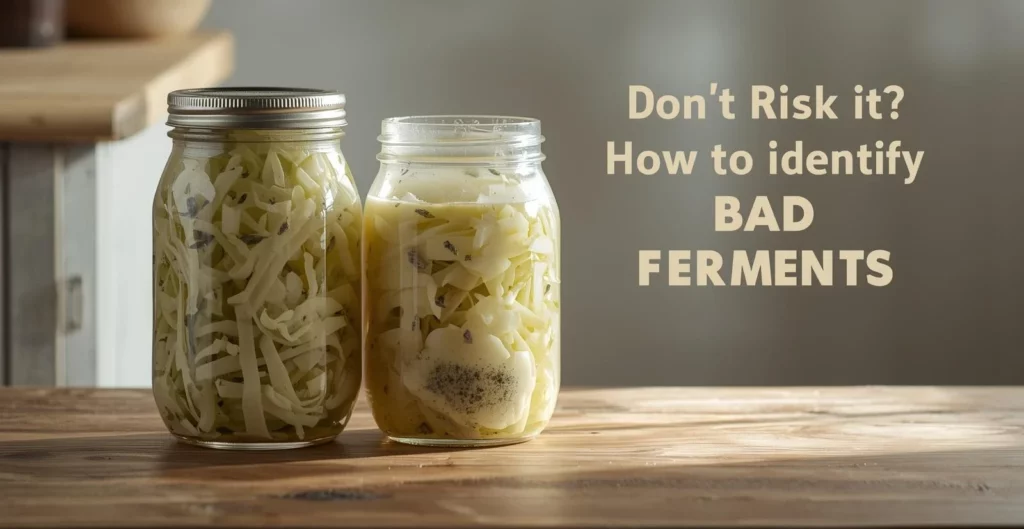
What About Kahm Yeast?
This is where a lot of confusion comes in.
You might see a white film on the surface and assume the worst.
In many cases, that’s not mold — it’s kahm yeast, which is generally harmless.
It doesn’t look great and can affect taste slightly, but it doesn’t make your ferment unsafe.
If you want a clear breakdown, see:
How Storage Affects Safety
Storage plays a big role in how long your fermented foods stay good.
Once your ferment reaches the flavour you like, moving it to the fridge slows everything down.
This helps:
- Maintain flavour
- Preserve texture
- Extend shelf life
If you’re unsure about storage, this guide walks you through it:
How Long Do Fermented Foods Last?
This depends on the type of ferment, but generally:
- Vegetable ferments → weeks to months
- Sauerkraut → several months
- Yogurt → 1–2 weeks
Over time, ferments don’t suddenly “go bad” — they gradually change.
You’ll notice:
- More sour flavour
- Softer texture
As long as they’re stored properly, they often remain safe even as the taste evolves.
Common Mistakes That Lead to Spoilage
Most spoilage can be traced back to a few common issues.
Not using enough salt
Salt is what helps control harmful bacteria.
Too little salt increases the risk of problems.
If you’re unsure about your ratios, see:
Not keeping vegetables submerged
Exposure to air is one of the biggest causes of mold.
Always make sure everything stays under the liquid.
Poor hygiene
You don’t need sterile conditions, but basic cleanliness matters.
- Clean jars
- Clean utensils
Leaving it too long at room temperature
Fermentation continues as long as conditions allow.
If left too long, flavour and texture can go too far.
When in Doubt, Trust Your Senses
This is one of the most useful habits you can build.
Ask yourself:
- Does it smell right?
- Does it look normal?
- Does it taste okay?
If something seems off, it’s better to be cautious.
You don’t need to take risks with food.
A Simple Way to Stay Safe
If you want to keep things straightforward, just follow these basics:
- Use the right amount of salt
- Keep everything submerged
- Store in the fridge once ready
- Use clean equipment
That alone prevents most problems.
Where to Go Next
If you want to build confidence and reduce mistakes, it helps to strengthen your foundation.
You can continue here:
Final Thoughts
Fermented foods can go bad, but it’s not something that happens often when you follow the basics.
Most of the time, the process works exactly as it should.
And when something does go wrong, the signs are usually clear:
- Smell
- Appearance
- Texture
Once you learn to recognise those, you stop second guessing and start trusting the process more.
And that’s really the goal — getting to a point where fermentation feels simple and predictable.