
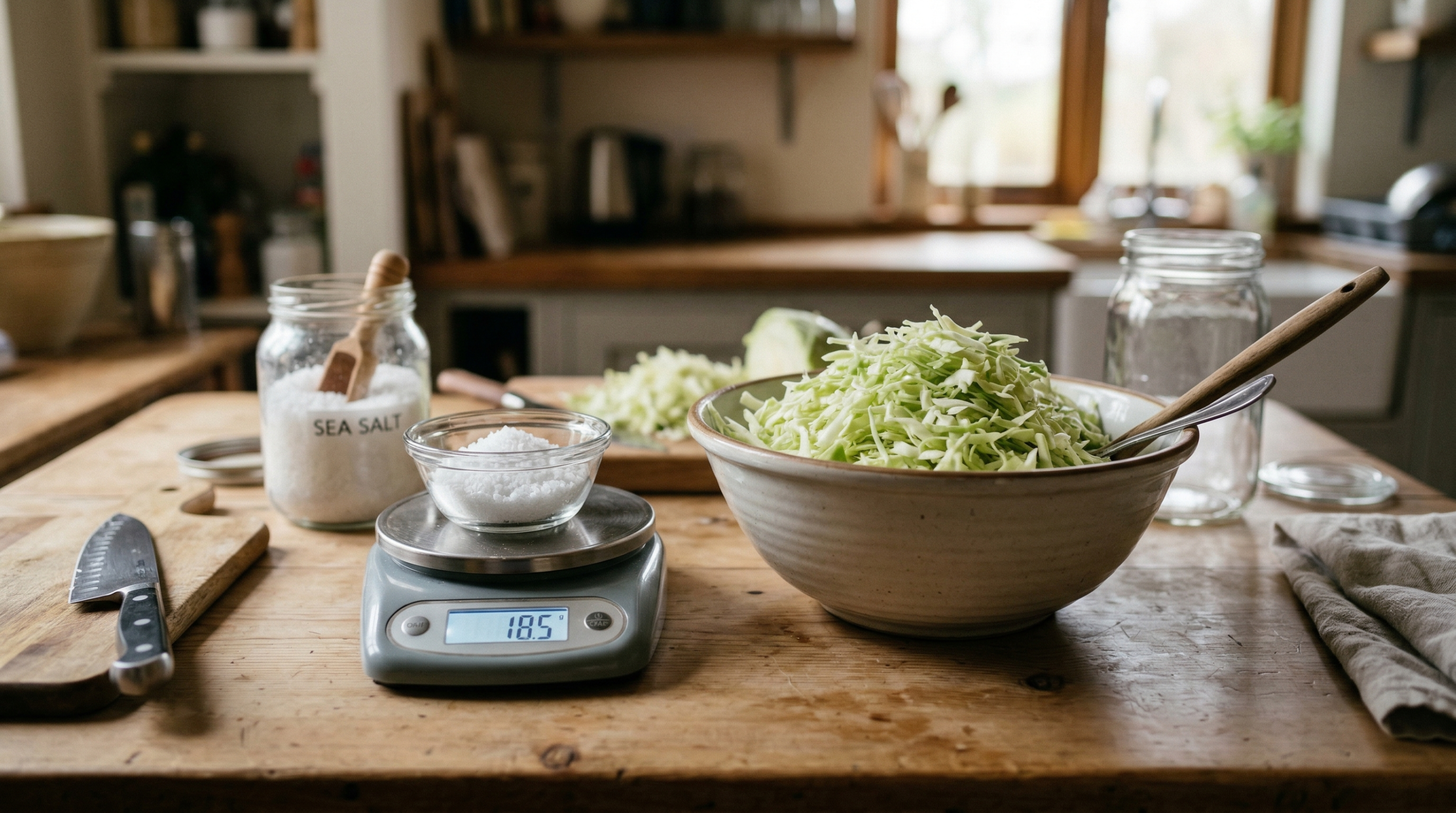
How Much Salt for Sauerkraut? (Exact Measurements Guide)
If you’re making sauerkraut at home, one of the first questions that comes up is:
“How much salt should I actually use?”
It sounds simple, but this is where a lot of people get stuck.
Some recipes say a teaspoon, others say a tablespoon, and then you start seeing percentages and it all gets a bit confusing.
The good news is, once you understand one basic rule, it becomes very straightforward.
In this guide, I’ll show you exactly how much salt to use for sauerkraut, how to measure it properly, and how to avoid the most common mistakes.
The Simple Rule: 2% Salt by Weight
When it comes to sauerkraut, the standard guideline is:
Use 2% salt based on the weight of your cabbage.
That means:
- 2 grams of salt for every 100 grams of cabbage
- Or 20 grams of salt per 1 kilogram
This ratio works because it creates the right environment for fermentation:
- It slows down harmful bacteria
- It allows beneficial bacteria to take over
- It helps draw out the natural juices from the cabbage
Once you understand this, you don’t need to rely on guesswork anymore.
If you want a broader breakdown of salt in fermentation, see:
Why Weight Matters (Not Teaspoons)
One of the biggest mistakes beginners make is measuring salt by volume instead of weight.
A teaspoon of salt can vary depending on:
- The type of salt
- How fine or coarse it is
- How tightly it’s packed
That means you can easily end up using too much or too little.
Using weight removes that problem completely.
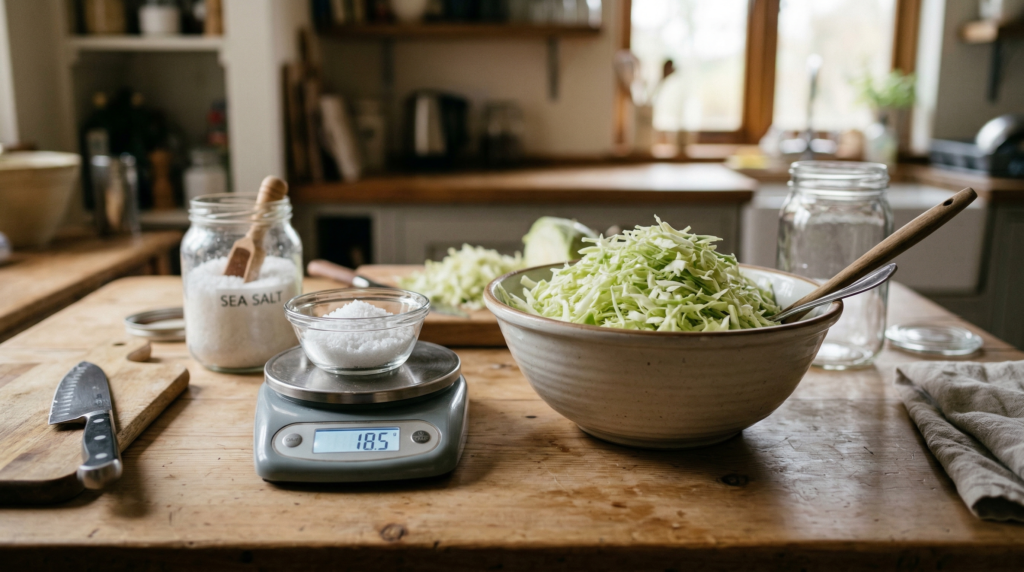
A simple kitchen scale is one of the best tools you can have when starting out.
How to Measure Salt for Sauerkraut (Step-by-Step)
This is easier than it sounds.
Step 1: Weigh Your Cabbage
After chopping your cabbage, weigh it.
Example:
- 1kg cabbage
Step 2: Calculate 2%
Take the weight and multiply by 0.02
Example:
- 1kg → 20g salt
Step 3: Add Salt and Mix
Sprinkle the salt over your cabbage and start mixing.
As you work it in, the cabbage will begin to soften and release liquid.
That liquid becomes your brine.
Step 4: Pack Into a Jar
Press the cabbage down firmly so the liquid covers it.
Keeping everything submerged is key.
If you want a full walkthrough of the process, you can follow it here:
How to Make Sauerkraut at Home
What Happens If You Use Too Little Salt?
Too little salt is where most problems happen.
If your salt level is too low:
- Harmful bacteria can grow
- Fermentation becomes unstable
- The risk of spoilage increases
This is why sticking close to the 2% rule is important, especially when you’re starting out.
What Happens If You Use Too Much Salt?
Too much salt won’t usually ruin your sauerkraut, but it can affect the outcome.
You might notice:
- Slower fermentation
- A saltier taste
- Less active bubbling
In most cases, it will still ferment, just more slowly.
Can You Adjust the Salt Level?
Once you’ve got some experience, you can adjust slightly depending on your preference.
For example:
- Slightly less salt → faster fermentation, milder control
- Slightly more salt → slower fermentation, more control
But when you’re starting out:
It’s best to stay close to 2%
What Type of Salt Should You Use?
Not all salt is the same.
For fermentation, it’s best to use:
- Sea salt
- Rock salt
- Pickling salt
Try to avoid:
- Iodized table salt
- Salt with anti-caking agents
These can interfere with the fermentation process.
Common Mistakes When Adding Salt
A few simple mistakes can make a big difference.
Guessing instead of measuring
It’s easy to underestimate or overestimate salt by eye.
Measuring properly gives you consistent results.
Not mixing the salt evenly
Make sure the salt is distributed throughout the cabbage.
This helps everything ferment evenly.
Not releasing enough liquid
If you don’t massage the cabbage enough, it may not release enough brine.
Take your time with this step.
Letting cabbage sit above the liquid
Anything exposed to air increases the risk of issues.
Always keep everything submerged.
If you’re unsure about safety, see:
How Long Does Sauerkraut Take to Ferment?
Once your salt is added and everything is packed, fermentation begins.
Typical timeline:
- 3–5 days → mild flavour
- 5–10 days → stronger flavour
Temperature also plays a role.
Warmer conditions → faster fermentation
Cooler conditions → slower fermentation
If you’re not seeing much activity, this can help:
[LINK: Why Is My Ferment Not Bubbling?]
How to Know If Your Sauerkraut Is Working
Instead of focusing only on bubbles, look for:
- A tangy, sour smell
- Slight cloudiness in the liquid
- A gradual change in taste
These are better indicators than visible bubbling.
Where to Go Next
Once you’ve got your salt ratio right, the rest of the process becomes much easier.
If you want to keep building your skills, start here:
Final Thoughts
Getting the salt right is one of the most important parts of making good sauerkraut.
But once you understand the basic 2% rule, it stops being confusing.
You don’t need complicated measurements or guesswork.
Just:
- Weigh your cabbage
- Add 2% salt
- Keep everything submerged
That’s enough to get consistent, reliable results.
And like everything with fermentation, the more you do it, the easier it becomes.