
If you’re looking for a natural, sustainable way to support weight loss, fermented foods might be one of the most overlooked tools available.
Unlike typical “diet foods” that focus only on calories, fermented foods work at a deeper level—supporting your gut, improving digestion, and helping regulate appetite. And when your gut is functioning well, everything from metabolism to cravings becomes easier to manage.
A big reason fermented foods work so well is their impact on your gut, which plays a major role in fat storage and appetite. If you want a deeper understanding, here’s how gut health affects weight loss.
In this guide, you’ll learn exactly how fermented foods support weight loss, which ones work best, and how to easily add them into your daily routine.
What Are Fermented Foods?
Fermentation is a natural process where beneficial bacteria break down sugars and starches in food. This process produces compounds like lactic acid and creates probiotics, which are live bacteria that support gut health.
Common fermented foods include:
- Yogurt
- Kefir
- Sauerkraut
- Kimchi
- Kombucha
- Miso
- Tempeh
These foods don’t just last longer—they become more nutritious and easier to digest.
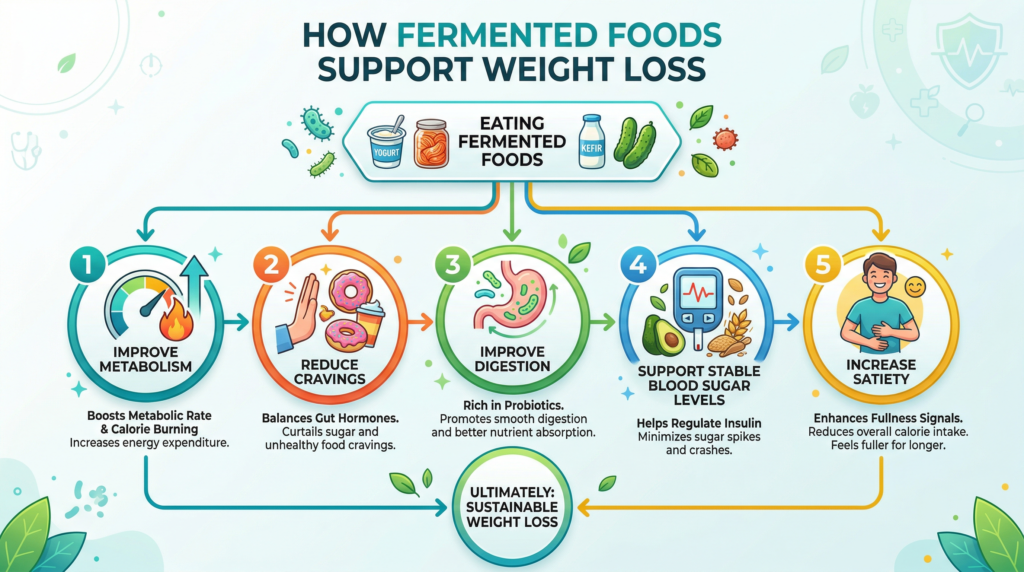
How Fermented Foods Help With Weight Loss
Fermented foods don’t magically burn fat—but they create the internal conditions that make weight loss easier and more sustainable.
1. Improve Gut Health and Metabolism
Your gut microbiome plays a major role in how your body processes food and stores fat.
A healthy balance of gut bacteria has been linked to:
- Better metabolism
- Reduced fat storage
- Improved energy use
Fermented foods introduce beneficial bacteria that help rebalance your gut, which can directly support weight management.
2. Reduce Cravings and Appetite
One of the biggest challenges with weight loss is controlling hunger.
Certain gut bacteria influence hormones like ghrelin and leptin, which regulate hunger and fullness.
When your gut is balanced:
- You feel fuller for longer
- Sugar cravings decrease
- Snacking becomes easier to control
This is one of the most noticeable benefits people experience when they start eating fermented foods regularly.
3. Improve Digestion and Reduce Bloating
Poor digestion can lead to bloating, discomfort, and inefficient nutrient absorption.
Fermented foods help by:
- Breaking down difficult-to-digest compounds
- Supporting enzyme activity
- Improving nutrient absorption
Many people report feeling “lighter” within days of adding fermented foods into their diet.
4. Support Stable Blood Sugar Levels
Blood sugar spikes and crashes are a major cause of cravings and fat storage.
Fermented foods may help:
- Slow carbohydrate absorption
- Improve insulin sensitivity
- Reduce energy crashes
This leads to more stable energy and fewer hunger spikes throughout the day.
5. Increase Satiety With Nutrient-Dense Foods
Many fermented foods are rich in:
- Protein (tempeh, yogurt)
- Fibre (kimchi, sauerkraut)
This combination helps you stay full without overeating, making it easier to maintain a calorie deficit naturally.
Best Fermented Foods for Weight Loss
Some of these foods are particularly effective for reducing bloating and targeting abdominal fat. Here’s a breakdown of the best fermented foods for belly fat.
Here are some of the most effective fermented foods to include in your diet:
Yogurt (Especially L. Reuteri Yogurt)



Yogurt is one of the easiest ways to get probiotics daily.
L. reuteri yogurt, in particular, has been linked to:
- Improved gut balance
- Reduced inflammation
- Better appetite control
It works well as a breakfast base or snack.
Kimchi
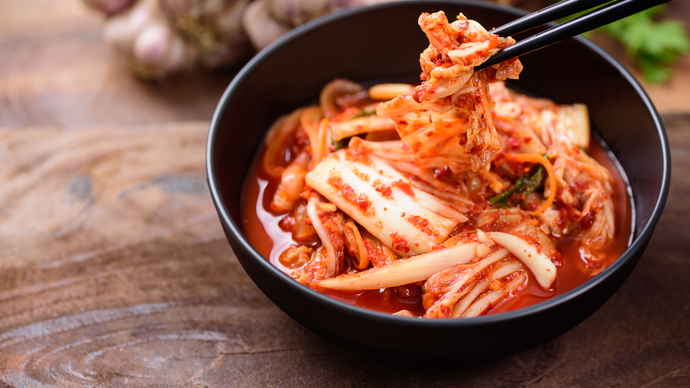


Kimchi is rich in fibre, vitamins, and beneficial bacteria.
Some research suggests it may:
- Support fat metabolism
- Improve cholesterol
- Help regulate blood sugar
Its strong flavour also helps make simple meals more satisfying.
Sauerkraut



Sauerkraut is low in calories but high in probiotics and fibre.
It’s great for:
- Supporting digestion
- Reducing bloating
- Adding volume to meals without extra calories
Kefir
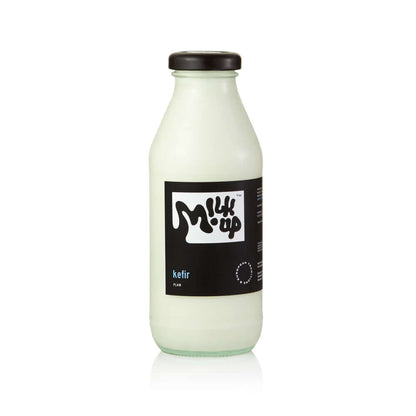


Kefir is a drinkable fermented milk packed with diverse probiotics.
Benefits include:
- Improved digestion
- Reduced inflammation
- Support for healthy body composition
Kombucha



Kombucha is a fermented tea that can help replace sugary drinks.
It may:
- Reduce sugar cravings
- Support gut health
- Provide a low-calorie alternative to soft drinks
Tempeh


Tempeh is a high-protein fermented soy product.
It’s especially useful because:
- High protein increases satiety
- Fermentation improves digestibility
- Helps reduce overall calorie intake
Miso



Miso is commonly used in soups and dressings.
Having miso before meals can:
- Increase fullness
- Help control portion sizes
- Support digestion
How to Add Fermented Foods Into Your Diet
You don’t need a complete diet overhaul. Small additions work best.
Start with:
- A spoonful of sauerkraut with meals
- Yogurt or kefir for breakfast
- Kimchi added to eggs or rice dishes
- Kombucha instead of soft drinks
Consistency matters more than quantity.
How Much Should You Eat?
Start small:
- 1 serving per day (e.g., yogurt or a few forkfuls of kimchi)
Then gradually increase as your gut adapts.
Too much too soon can cause:
- Bloating
- Gas
Build up slowly for best results.
Common Mistakes to Avoid
1. Buying Pasteurised Products
Pasteurisation kills beneficial bacteria.
Look for:
- “Live cultures”
- “Raw”
- “Unpasteurised”
2. Eating Too Much Too Fast
More is not better at the start.
Introduce fermented foods gradually.
3. Ignoring Sodium Content
Some fermented foods are high in salt.
Balance them with whole, fresh foods.
Frequently Asked Questions
Are fermented foods enough for weight loss?
No. They support weight loss, but you still need a balanced diet and calorie control.
How long does it take to see results?
Many people notice improvements in digestion within days, while weight-related benefits may take a few weeks.
Are store-bought fermented foods effective?
They can be, as long as they contain live cultures. Always check the label.
Can everyone eat fermented foods?
Most people can, but those with gut sensitivities should start slowly and monitor how they feel.
Bottom Line
Fermented foods aren’t a magic solution for weight loss—but they are one of the most powerful tools for improving the systems that control it.
By supporting your gut health, improving digestion, and helping regulate appetite, they make weight loss feel more natural and sustainable.
Start small, stay consistent, and focus on variety. Over time, these simple additions can have a noticeable impact on how you feel, eat, and manage your weight.