
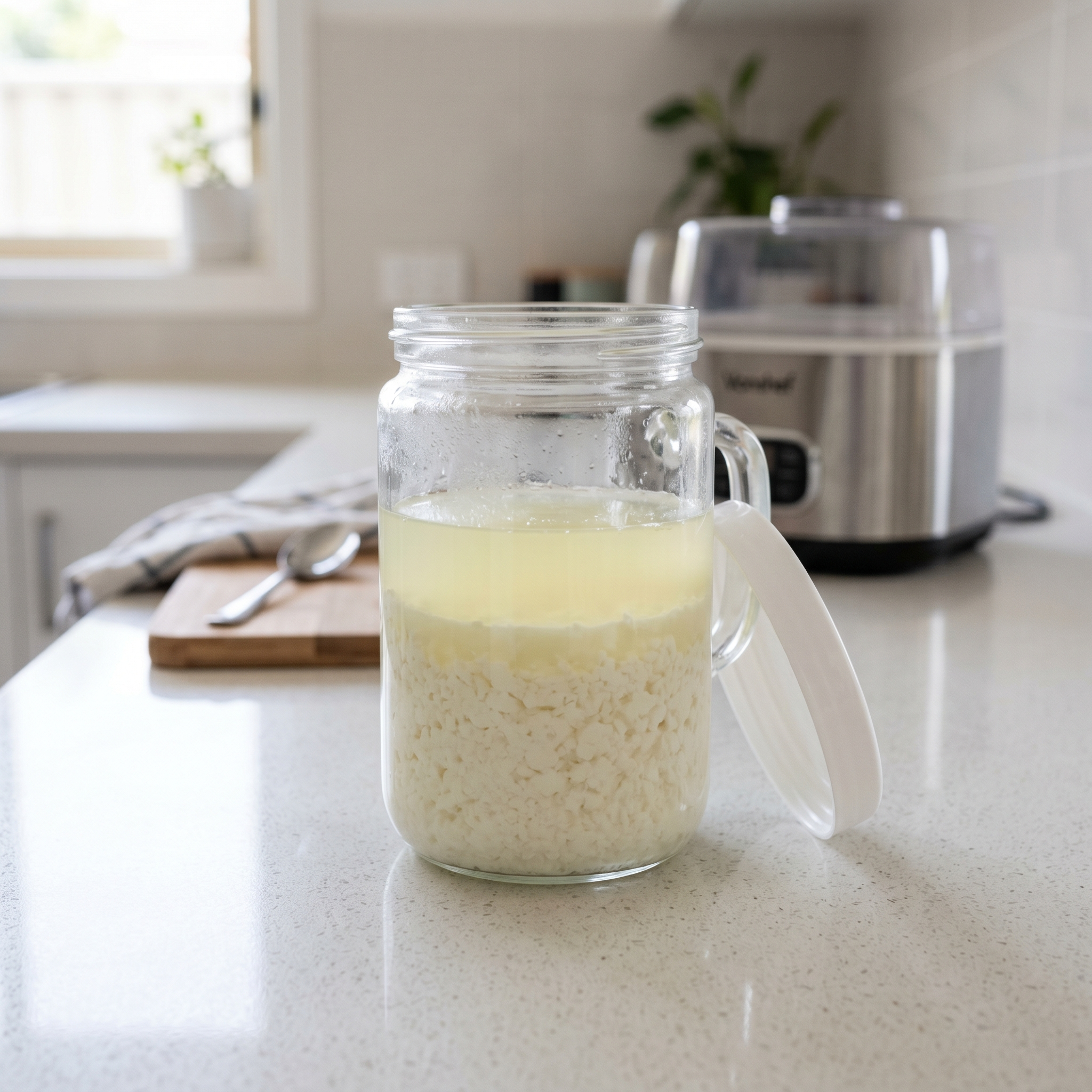
Why Is My L. Reuteri Yogurt Separating Into Curds and Whey? (Common Causes and Fixes)
You open your batch after a long fermentation and instead of thick creamy yogurt, you see:
- clumps
- watery liquid
- curds floating in whey
It’s frustrating, especially after waiting 36 hours.
The good news is:
separation is common, and it usually points to a fixable issue.
In many cases, the yogurt did ferment — it just didn’t hold texture the way you wanted.
I found that once I stopped blaming the starter culture and focused on heat, milk, and consistency, separation became much easier to solve.
This guide explains why L. reuteri yogurt separates into curds and whey, what it means, and how to improve future batches.
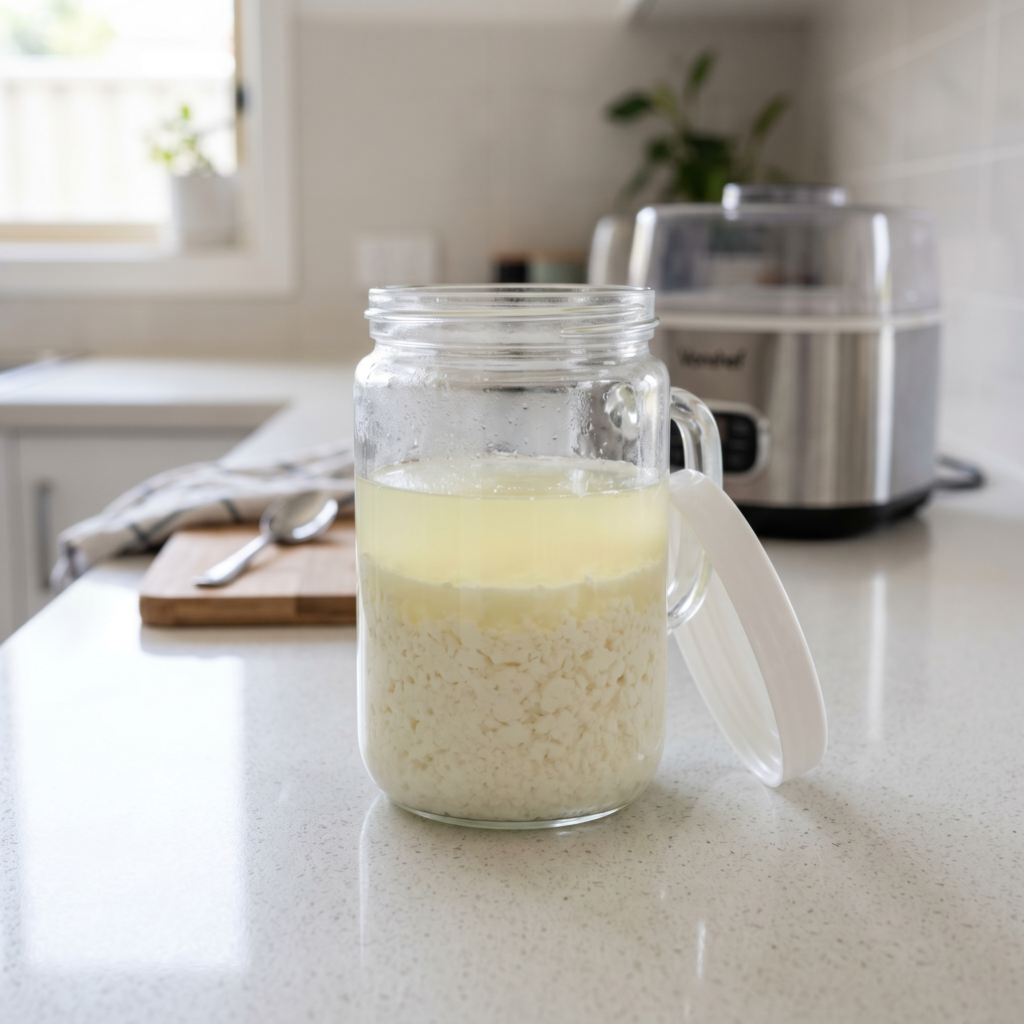
Why Does L. Reuteri Yogurt Separate Into Curds and Whey?
L. reuteri yogurt commonly separates because of excessive heat, unstable temperature, over-fermentation, low milk solids, or ingredients that affect texture.
Usually it means the proteins set unevenly or the batch was stressed during fermentation.
The Most Common Cause: Too Much Heat
This is often the biggest culprit.
Many yogurt makers run hotter than expected.
Even if the display says the right number, actual internal temperature may be higher.
Too much heat can cause:
- curdling
- whey release
- grainy texture
- overly sour flavour
Fix It:
Use a digital thermometer to test your setup with water first.
Over-Fermentation
Long fermentation is part of the L. reuteri method, but pushing far beyond your normal timing can sometimes increase separation.
Fix It:
Stick to your consistent target time (commonly 36 hours).
Low Milk Solids
Thin milk bases often separate more easily than richer mixtures.
Fix It:
Try:
- richer full-fat milk
- half-and-half style mix
- adding milk powder
This can improve structure.
Additives in Milk
Some dairy products contain:
- gums
- stabilisers
- emulsifiers
These don’t always behave well during extended fermentation.
Fix It:
Use simpler ingredient milk when possible.
Weak or Inconsistent Starter
If the culture is weak, fermentation may happen unevenly.
Fix It:
Try a fresher starter culture or stronger previous batch.
My Experience With Separation
I noticed separation often happened when I assumed the machine temperature was correct.
Once I tested the real temperature and improved the milk base, results became much thicker and more repeatable.
That changed everything more than buying new cultures.
Can You Still Eat Separated Yogurt?
Often, yes — if it:
- smells normal
- looks normal aside from separation
- has no contamination signs
You can:
- stir it
- strain it
- use it in smoothies
Texture problems do not always mean failure.
How to Prevent Separation Next Time
- verify temperature
- use richer milk
- use strong starter
- keep timing consistent
- avoid constantly moving the jar
Simple consistency usually wins.
Quick Troubleshooting Table
ProblemLikely CauseBest FixCurds + lots of wheyToo hotLower temperatureThin + separatedWeak milk baseRicher milkSour + separatedToo long / hotReduce stressRepeated failuresWeak starterFresh culture
Frequently Asked Questions
Is separated L. reuteri yogurt ruined?
Not always. If it smells and looks normal, it may still be usable.
Why is there liquid on top?
That is usually whey.
Does too much heat cause separation?
Yes, it is one of the most common causes.
Can I stir it back together?
Often yes, depending on texture.
Is 36 hours causing it?
Not necessarily. Heat and milk quality are often bigger factors.
Where to Go Next
If you’re improving batches, these help:
- Best Temperature for L. Reuteri Yogurt
- Best Milk for L. Reuteri Yogurt
- Why Your L. Reuteri Yogurt Failed
- How Long to Ferment L. Reuteri Yogurt
- Best Digital Thermometers for Yogurt Making
Final Thoughts
Separation into curds and whey usually means something in the process needs adjusting — not that the whole method is broken.
Most often it’s heat, milk choice, or consistency.
Fix those first, and future batches usually improve quickly.