
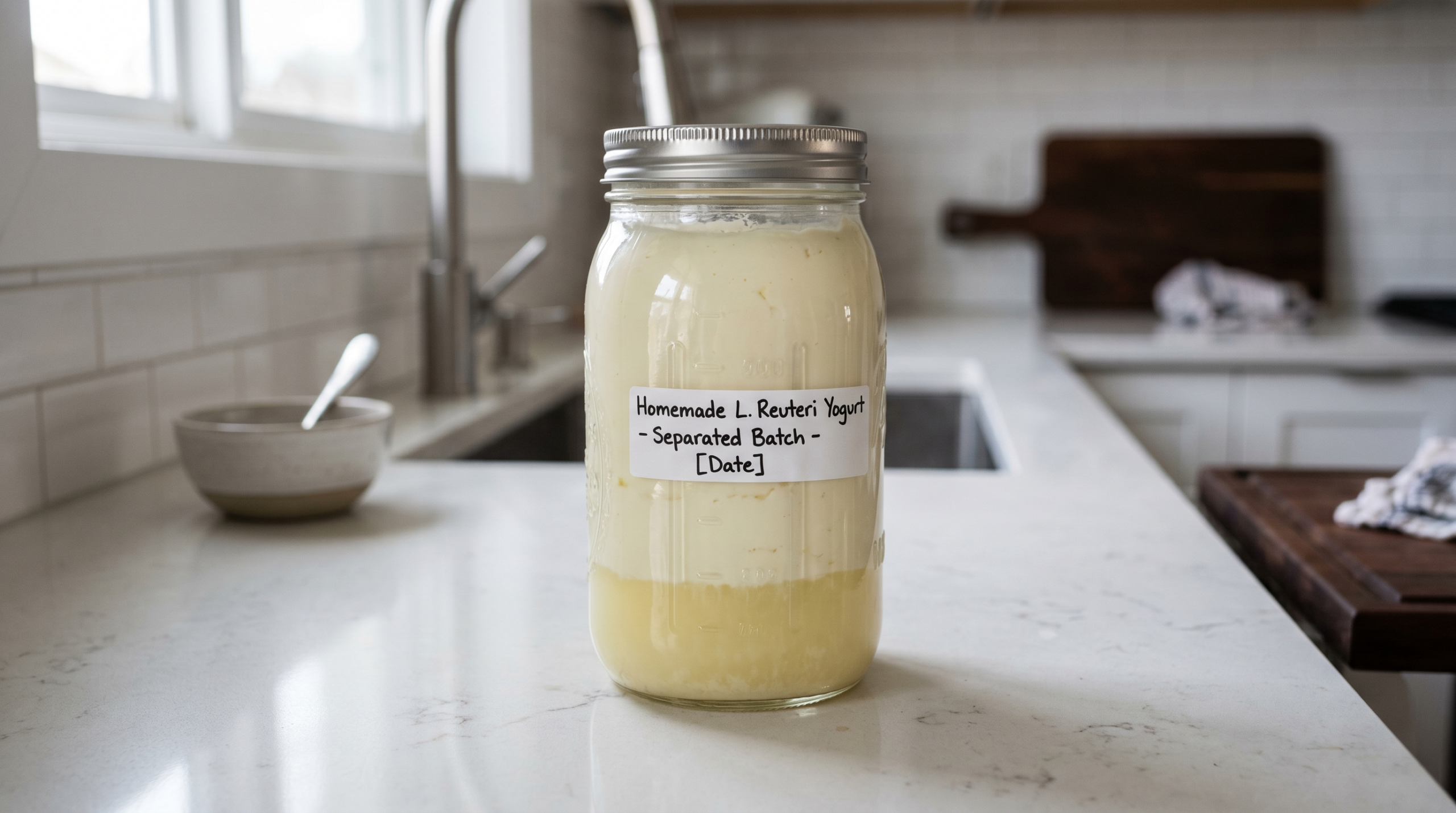
Why Your L. Reuteri Yogurt Failed (Fix Every Common Problem)
Making L. reuteri yogurt at home can be incredibly rewarding when it works well.
But if you’ve already tried it, you’ll know results can vary a lot.
One batch comes out thick and creamy. The next separates into curds and whey, smells odd, or barely ferments at all.
I found the biggest improvements came when I stopped guessing and started controlling a few key variables: temperature, ingredients, cleanliness, and starter quality.
This guide covers the most common reasons L. reuteri yogurt fails — and how to fix them.
Common L. Reuteri Yogurt Problems
| Problem | Most Likely Cause | Quick Fix |
|---|---|---|
| Separated | Too hot | Lower temperature |
| Runny | Weak starter | Fresh starter + 36h |
| Smells bad | Contamination | Discard batch |
| No change | Dead culture | New starter |
| Grainy | Additives / heat | Simpler milk |
Why Did My L. Reuteri Yogurt Fail?
L. reuteri yogurt usually fails because of one or more of these issues:
- temperature too high or too low
- weak or damaged starter culture
- contaminated utensils or ingredients
- additives in the milk or cream
- too much or too little prebiotic fibre
- fermentation time too short
- inconsistent equipment
Once you identify the weak point, results usually improve quickly.
Problem 1: Yogurt Separated Into Curds and Whey
This is one of the most common complaints.
Instead of thick yogurt, you get solids floating in liquid.
Common causes:
- incubation temperature too high
- poor quality starter culture
- additives in dairy product
- over-fermentation
Fix it:
- keep temperature around 36–38°C (97–100°F)
- use dairy with minimal ingredients
- shorten fermentation slightly if needed
- try a fresh starter batch
I’ve seen temperature be the biggest culprit more often than anything else.
Problem 2: It Stayed Thin or Runny
If your batch never thickened properly:
Common causes:
- weak bacteria starter
- too short fermentation time
- low-fat milk
- no prebiotic support
- unstable temperature
Fix it:
- ferment for 36 hours
- use half-and-half or higher fat dairy if tolerated
- add a small amount of inulin
- verify your device temperature with a thermometer
Consistency matters more than fancy equipment.
Problem 3: It Smells Bad
L. reuteri yogurt should smell tangy or mildly sour.
If it smells rotten, foul, or very unpleasant:
Likely causes:
- contamination
- bad starter culture
- dirty utensils
- residue from soap or detergent
- temperature too warm
Fix it:
Discard the batch.
Then next time:
- clean utensils thoroughly
- rinse well after washing
- use fresh ingredients
- start with a new culture
If it smells clearly wrong, trust that instinct.
Problem 4: Nothing Happened
Sometimes it looks almost unchanged after many hours.
Common causes:
- dead bacteria from heat during shipping/storage
- incubation too cool
- expired probiotic capsules
- wrong device settings
A poor starter often causes failures. See Best L. Reuteri Starter Cultures.
Fix it:
- test with a small batch first
- buy fresh culture from reliable source
- confirm temperature with thermometer
- check your machine is actually heating properly
Heat during shipping can ruin probiotics more often than people realise.
Problem 5: Strange Texture or Grainy Finish
Common causes:
- certain milk additives
- overheating
- inconsistent fermentation temperature
- too much fibre added
Fix it:
- choose dairy with simple ingredients
- reduce prebiotic amount
- maintain stable temperature
- stir after chilling
Ingredients Matter More Than People Think
For best results, use dairy with as few ingredients as possible.
Good options:
- whole milk
- half-and-half
- cream + milk blends
Try to avoid products with lots of gums or stabilisers such as:
- carrageenan
- xanthan gum
- gellan gum
These can interfere with texture and cause separation.
Cleanliness Matters (But Don’t Overcomplicate It)
You do not need laboratory sterilisation.
But you do need:
- clean jars
- clean spoons
- clean mixing tools
- well-rinsed utensils
Soap residue can be just as annoying as contamination.
I avoid tools with cracks, seams, or hard-to-clean joints.
Temperature Is Everything
This is where many batches go wrong.
Some yogurt makers run hotter than advertised.
A machine set to 100°F may actually run much higher.
Best move:
Use a cheap thermometer and test your device with water first.
That one step can save a lot of failed batches.
Does Prebiotic Fibre Help?
Yes. Prebiotic fibre gives the starter culture an additional food source during fermentation.
I’ve found a small amount of inulin can improve consistency and thickness.
But too much can sometimes increase separation
Keep it simple:
- start small
- stay consistent
- adjust gradually
If you’re unsure what to use, see my guide on Best Prebiotics for L. Reuteri Yogurt.
My Biggest Lesson
When I first started, I kept changing too many things at once.
Different milk, different fibre, different times, different temperatures.
That made troubleshooting impossible.
Once I standardised one method, results became much more repeatable.
Frequently Asked Questions
Why did my L. reuteri yogurt separate?
Usually temperature too high, additives in milk, or over-fermentation.
Why is my L. reuteri yogurt runny?
Weak starter culture, low fat dairy, or insufficient fermentation time.
Can I still eat separated yogurt?
If it smells normal and looks otherwise fine, often yes. Stirring can help texture. It can be strained as well.
What temperature is best?
Around 36–38°C (97–100°F) is commonly used.
How long should I ferment it?
L. reuteri yogurt should be fermented for 36 hours
Where to Go Next
If you’re improving your batches, these help:
- Best Prebiotics for L. Reuteri Yogurt
- Best L. Reuteri Starter Cultures
- Best Milk for L. Reuteri Yogurt
- Beginner’s Guide to Fermentation
Final Thoughts
Most failed L. reuteri yogurt batches come down to a few fixable problems.
Usually it’s temperature, starter quality, ingredients, or consistency.
Once you simplify the process and control those basics, results improve fast.
That’s when homemade L. reuteri yogurt becomes easy.