
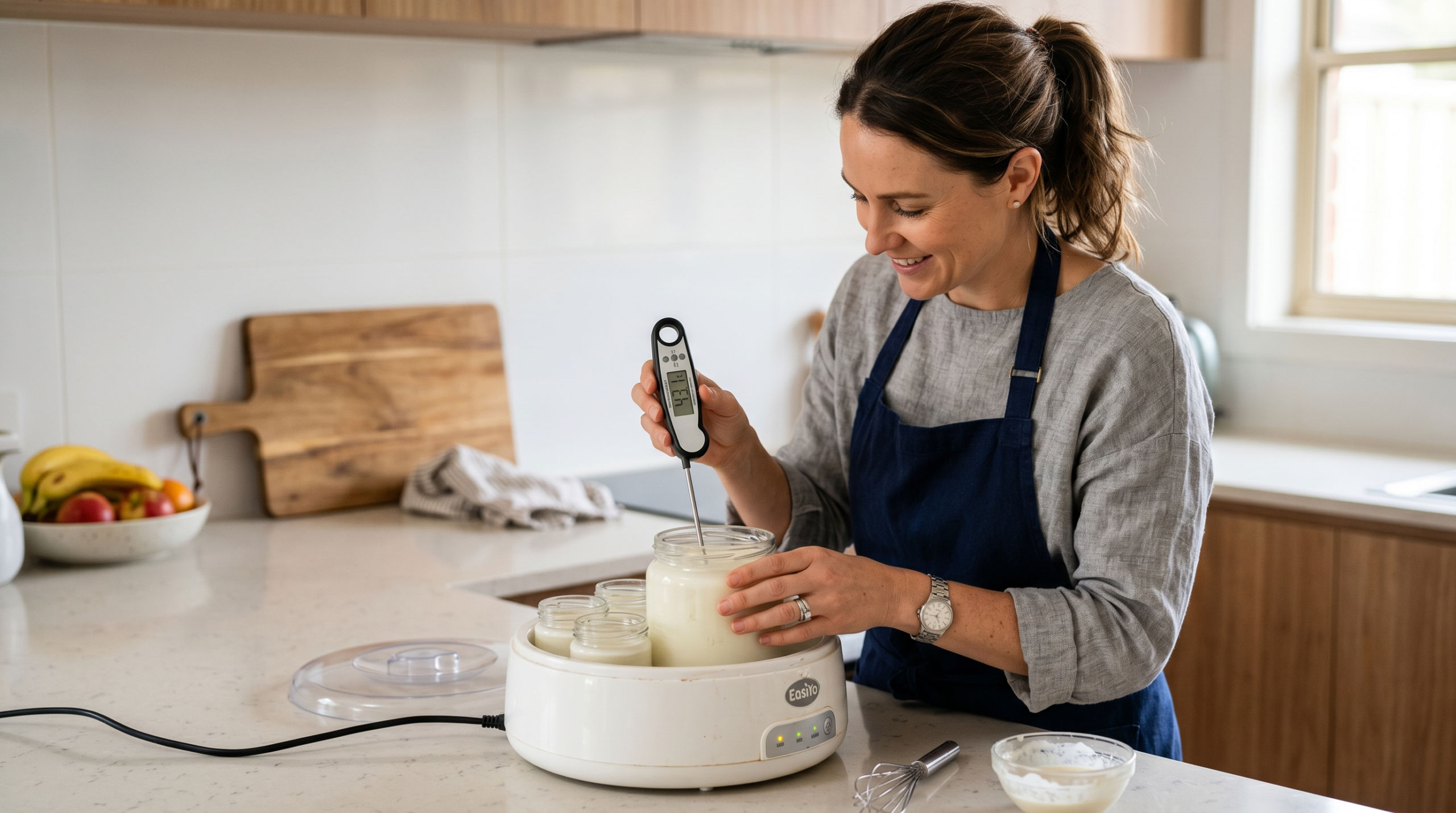
Best Temperature for L. Reuteri Yogurt (Why 38°C Matters)
When people have trouble making L. reuteri yogurt, they often blame the starter culture or milk.
But in many cases, the real issue is temperature.
Even a strong starter and good ingredients can fail if the fermentation temperature is too high or too low.
Once I started checking actual device temperatures instead of trusting presets, results became much more reliable.
This guide explains the best temperature for L. reuteri yogurt, what happens when it’s wrong, and how to fix common issues.
What Is the Best Temperature for L. Reuteri Yogurt?
The commonly used temperature range for L. reuteri yogurt is 36–38°C (97–100°F). This range is used to support fermentation while avoiding temperatures that may weaken or damage the culture.
Why Temperature Matters So Much
Temperature affects:
- bacterial growth
- fermentation speed
- thickness
- separation
- flavour
- final consistency
If temperature is off, changing milk or prebiotics often won’t fix the real problem.
How to Check Your Yogurt Maker
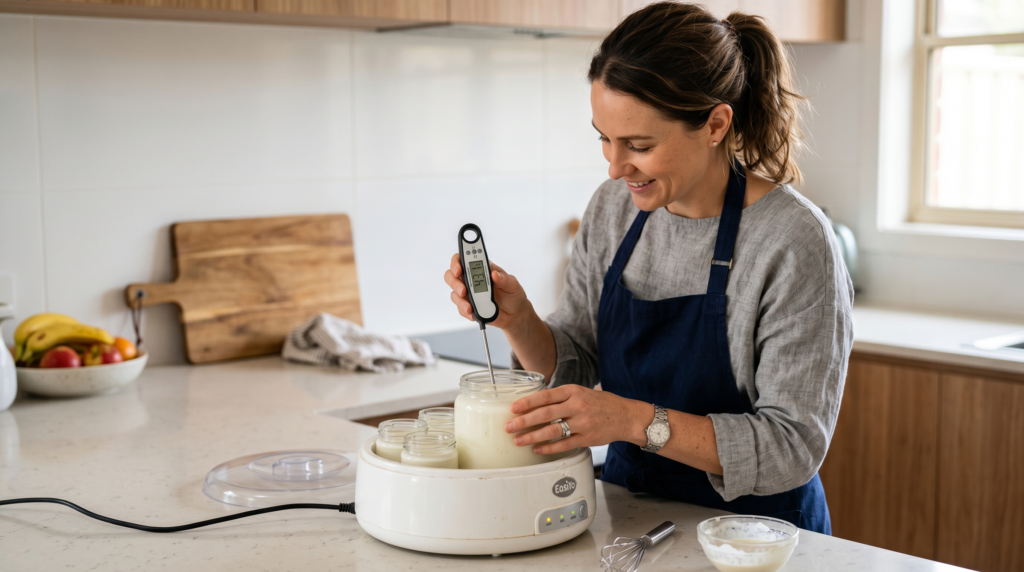
Use a simple digital thermometer to test the actual temperature of your device with water before starting a batch. This can quickly reveal if your machine runs hotter or cooler than expected.
This is the digital thermometer I use and recommend.
What Happens If It Runs Too Hot?
If your device runs too warm, you may get:
- curds and whey separation
- grainy texture
- sour harsh flavour
- weak results
- damaged cultures
Many preset yogurt makers run hotter than expected.
What Happens If It Runs Too Cool?
If temperature is too low:
- fermentation may stall
- yogurt stays thin
- weak tangy flavour
- lower bacterial growth
My Biggest Lesson
I used to trust whatever number the machine claimed.
Once I tested it with a thermometer, I realised some devices can be quite inaccurate.
That explained several failed batches immediately.
How to Check Your Yogurt Maker
Simple method:
- Fill with water
- Run on your yogurt setting
- Wait 30 minutes
- Check temperature with thermometer
This can save wasted batches.
Best Devices for Temperature Control
The easiest setups are:
- adjustable yogurt makers
- sous vide devices
- reliable incubators
Preset machines can still work if tested first.
If You’re Getting Separation
Before changing milk or starter culture, check heat first.
Too much heat is one of the most common causes.
Frequently Asked Questions
What temperature should L. reuteri yogurt be made at?
36–38°C (97–100°F) is commonly used.
Can 40°C be too high?
It may be for some setups and can increase separation.
Why is my yogurt maker failing?
Many machines run hotter or cooler than stated.
Does low temperature ruin it?
Low temperature can slow or weaken fermentation.
Should I trust preset settings?
It’s better to verify with a thermometer.
Where to Go Next
- Why Your L. Reuteri Yogurt Failed
- How Long to Ferment L. Reuteri Yogurt
- Best Yogurt Makers for L. Reuteri Yogurt
- Best Milk for L. Reuteri Yogurt
- Best Digital thermometers for Yogurt Making and Fermentation
Final Thoughts
If you control one thing well, make it temperature.
Many “mystery failures” come down to heat problems, not ingredients.
Once temperature is steady, everything else gets easier.