
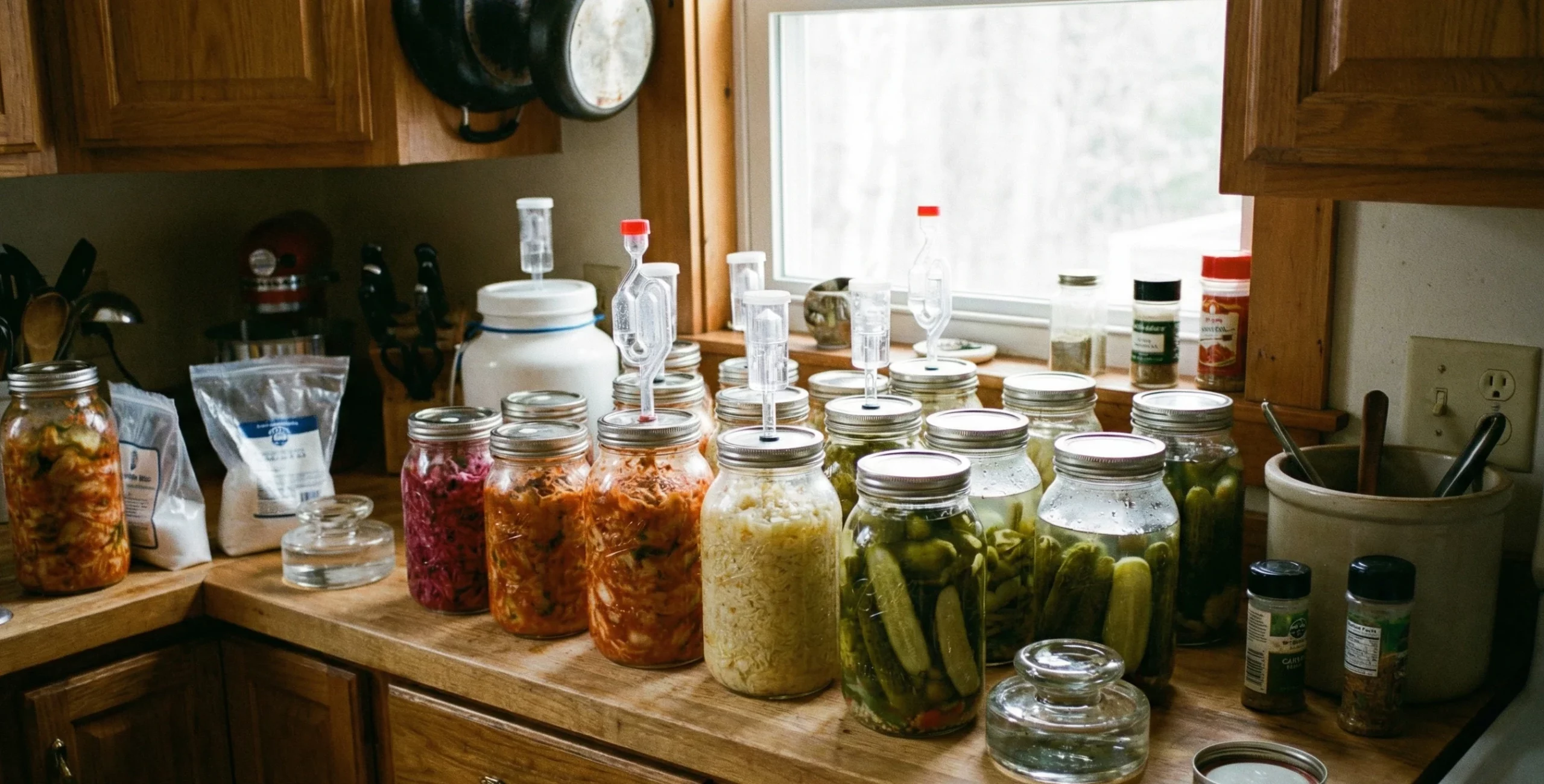
Beginner’s Guide to Fermentation How to Start Fermenting at Home
My introduction to fermentation didn’t start with a crock of sauerkraut or a jar of bubbling kimchi. It started in my kitchen with a simple batch of homemade yogurt.
I’d been reading about gut health and kept coming back to the same idea that fermented foods were one of the most consistent and natural ways to support it. Yogurt seemed like the least intimidating place to begin. No special equipment, ingredients I already had, and a process that felt manageable.
That first batch worked. And something about the process the simplicity of it, the fact that I’d made something genuinely nourishing from scratch got me curious about what else was possible.
That curiosity eventually led me to L. Reuteri yogurt, to kefir, to fermented vegetables, and to a genuine enthusiasm for fermentation that I hadn’t expected when I started. It’s become one of the most rewarding parts of how I eat and live.
If you’re at the beginning of that same journey, this guide is where I’d suggest you start.
I’m not a doctor and nothing here is medical advice just the experience of someone who ferments regularly at home and has learned what actually works.
What Fermentation Actually Is
Fermentation is one of those things that sounds more complicated than it really is.
At its most basic, fermentation is a natural process where beneficial microorganisms bacteria, yeast, or both break down sugars in food and transform them into something new. That transformation preserves the food, changes its flavour, and in many cases makes it more nutritious and easier to digest than it was before.
The most common type of fermentation for home fermenters is lactic acid fermentation. This is what happens when you make sauerkraut, kimchi, yogurt, or fermented vegetables. Lactic acid bacteria which are naturally present on vegetables and in milk consume the sugars in the food and produce lactic acid as a byproduct. That rising acidity is what preserves the food and gives fermented foods their distinctive tangy flavour.
The key thing to understand is that fermentation is controlled transformation. You’re not letting food go bad you’re creating the right conditions for beneficial bacteria to thrive, which in turn prevents harmful bacteria from taking hold. Once you understand that principle, the whole process starts to make sense.
Why People Have Been Fermenting for Thousands of Years
Fermentation isn’t a modern wellness trend. Every traditional food culture in the world has its own fermented foods developed long before anyone understood the microbiology behind what was happening.
In Korea, kimchi was packed into clay pots and buried to ferment through winter. In Europe, cabbage was transformed into sauerkraut as a way of preserving the harvest. In the Middle East and Central Asia, milk was fermented into yogurt. In every case, fermentation solved a practical problem how to preserve food without refrigeration and produced something that tasted better and lasted longer than the original ingredient.
What’s interesting is that traditional cultures were also getting the gut health benefits of fermented foods without knowing that’s what they were doing. The science has caught up with the tradition, and what we now understand about the gut microbiome gives us a clearer picture of why these foods have sustained human health for so long.
The Main Types of Fermentation
For home fermenters, there are really three types worth knowing about:
Lactic acid fermentation is the most common and the most approachable. This is the process behind sauerkraut, kimchi, yogurt, kefir, and most fermented vegetables. Beneficial bacteria convert sugars into lactic acid, creating a tangy, preserved food with a rich probiotic profile. This is where most people start, and for good reason it’s forgiving, reliable, and requires very little equipment.
Wild yeast fermentation is what happens in sourdough bread and kombucha. Wild yeasts convert sugars into carbon dioxide (which makes sourdough rise and kombucha fizzy) and small amounts of alcohol. Kombucha also involves a SCOBY a symbiotic culture of bacteria and yeast which does most of the work for you once you have one established.
Acetic acid fermentation is how vinegar is made alcohol is converted into acetic acid by specific bacteria. This is less common in home fermentation but worth knowing about as part of the broader picture.
For most beginners, lactic acid fermentation is where to start. It’s the simplest, the most forgiving, and it covers the widest range of foods.
Why Fermented Foods Are Worth Eating
I want to be honest here there’s a lot of overclaiming in the world of gut health, and I’d rather give you a balanced picture than make promises I can’t back up.
What the research consistently supports is that fermented foods contribute to a diverse and healthy gut microbiome. A diverse microbiome is increasingly linked to better digestion, stronger immune function, more stable mood, and healthier inflammation levels. These aren’t fringe ideas they’re areas of genuine and growing scientific interest.
What I can add from my own experience is that since making fermented foods a regular part of my diet starting with yogurt and building from there my digestion has been more settled, my energy more consistent, and my overall sense of wellbeing noticeably better.
Whether every benefit is directly attributable to the fermented foods specifically, I can’t say for certain. But they’re part of a picture that’s working for me, and the evidence behind them is solid enough that I’d encourage anyone to explore them.
For a deeper look at the specific health benefits, I’ve written a full post on the health benefits of fermented foods and a separate one on the health benefits of kefir specifically.
Is Home Fermentation Safe?
This is the question most beginners ask first, and it’s a fair one.
The honest answer is yes when you follow basic principles, home fermentation is very safe. The lactic acid produced during fermentation creates an environment that harmful bacteria simply can’t survive in. That’s the whole point of the process, and it’s why humans have relied on it for food preservation for thousands of years.
The principles to follow are straightforward:
Use the right amount of salt. For vegetable ferments, salt draws out moisture, creates the brine, and helps establish the right environment for beneficial bacteria. Too little and the environment may not be acidic enough. Too much and you inhibit the bacteria you want. Getting the salt ratio right is one of the most important things in fermentation I’ve written a full guide to salt ratios here.
Keep vegetables submerged. Exposure to air is where problems start. Vegetables above the brine line can develop mould. Keeping everything submerged under the brine using a weight if needed is the single most important thing you can do for a successful vegetable ferment.
Use clean equipment. Clean jars, clean utensils, clean hands. You don’t need to sterilise everything to laboratory standard fermentation is robust but starting with clean equipment gives beneficial bacteria the best possible environment to establish themselves.
Know what to look for. Bubbles and cloudiness are signs of active fermentation both completely normal and positive. Fuzzy mould growth is a sign something has gone wrong and the batch should be discarded. When in doubt, trust your senses. A good ferment smells tangy and interesting. A bad one smells genuinely unpleasant.
The Best Places to Start
If you’re new to fermentation, my honest advice is to start with one thing, get comfortable with it, and build from there. Here are the most beginner-friendly places to begin:
Homemade yogurt is where I started, and it remains one of my recommendations for beginners. The process is simple, the results are reliable, and you can eat it within 8 to 10 hours of starting. If you want to go further, L. Reuteri yogurt is a more specialised version with a longer fermentation time and a specific starter culture I’ve written extensively about it on this site.
Sauerkraut is probably the simplest vegetable ferment you can make. Cabbage, salt, and time. No special equipment required beyond a clean jar. It takes one to four weeks depending on your taste preference, and the results are genuinely delicious.
Fermented carrots are another great starting point quick, reliable, and versatile. Carrots with ginger and garlic is a combination I come back to regularly.
Kefir is a step up from yogurt in terms of the variety of beneficial bacteria it contains, but still very straightforward once you have your grains. I’ve written a full guide to the health benefits of kefir and will be covering how to make it at home shortly.
What Equipment Do You Actually Need?
Less than you might think.
For vegetable ferments sauerkraut, kimchi, fermented carrots you need:
- A clean glass jar (a wide-mouth mason jar is ideal)
- Fresh vegetables
- Good quality salt (non-iodised iodine can inhibit fermentation)
- Clean water if making a brine
Fermentation weights and airlocks are useful additions that make the process more reliable and less prone to mould issues I’ve written a guide to using weights and airlocks in fermentation that covers everything you need to know.
For yogurt and dairy ferments, a yogurt maker makes things significantly more reliable by maintaining a consistent temperature, though it’s possible to improvise with a warm oven or insulated container. I’ve covered the best yogurt makers for L. Reuteri yogurt in detail, including what to look for and what I use myself.
The main thing is not to let equipment hold you back from starting. A glass jar and some salt is enough to make your first sauerkraut today.
A Few Things Worth Knowing Before You Start
Temperature matters more than most beginners realise. Warmer temperatures speed fermentation up; cooler temperatures slow it down. Neither is wrong they just produce different results and timelines. In summer a sauerkraut might be ready in five days; in winter it might take two to three weeks. Taste it regularly and let your palate guide you.
Your first batch might not be perfect. That’s completely normal. Fermentation has a learning curve not a steep one, but a real one. The second batch is almost always better than the first, and by the third you’ll have a feel for the process that no guide can fully replace.
Small amounts of the right salt go a long way. A common beginner mistake is using too much or too little salt. I’d strongly recommend reading my guide to salt ratios before your first vegetable ferment it’s one of the things that makes the biggest difference to your results.
Start with one ferment and get good at it. It’s tempting to dive into sauerkraut, kefir, kombucha, and yogurt all at once. Resist that temptation. Start with one, make it several times until it feels reliable, and then add the next. That approach builds real confidence and real skill.
The Bigger Picture
Fermentation is one of those things that starts as curiosity and gradually becomes a way of engaging with food in a more intentional and satisfying way.
There’s something quietly rewarding about making something alive and nourishing from simple, everyday ingredients. It connects you to a tradition that stretches back thousands of years and to communities all over the world who discovered independently that this simple process could transform food in such remarkable ways.
I started with a batch of yogurt. Now fermentation is woven into how I eat every day L. Reuteri yogurt, kefir, sauerkraut, fermented vegetables through the seasons. Each one started with that same first step of just trying something simple and seeing what happened.
That’s all this is. Start somewhere simple. Pay attention to what you’re doing. And see where the curiosity takes you.
Where to Go Next
Once you’ve read this, these are the posts I’d suggest exploring next:
How to Ferment Vegetables at Home your step by step guide to getting started with vegetable ferments
L. Reuteri Yogurt Beginner’s Recipe a great first ferment if you’re interested in the gut health angle
Health Benefits of Fermented Foods the science behind why these foods are worth eating
Health Benefits of Kefir a deeper look at one of the most probiotic-rich fermented drinks
Salt Ratios for Fermentation essential reading before your first vegetable ferment
Using Weights and Airlocks in Fermentation — how to set up your jars for reliable results