
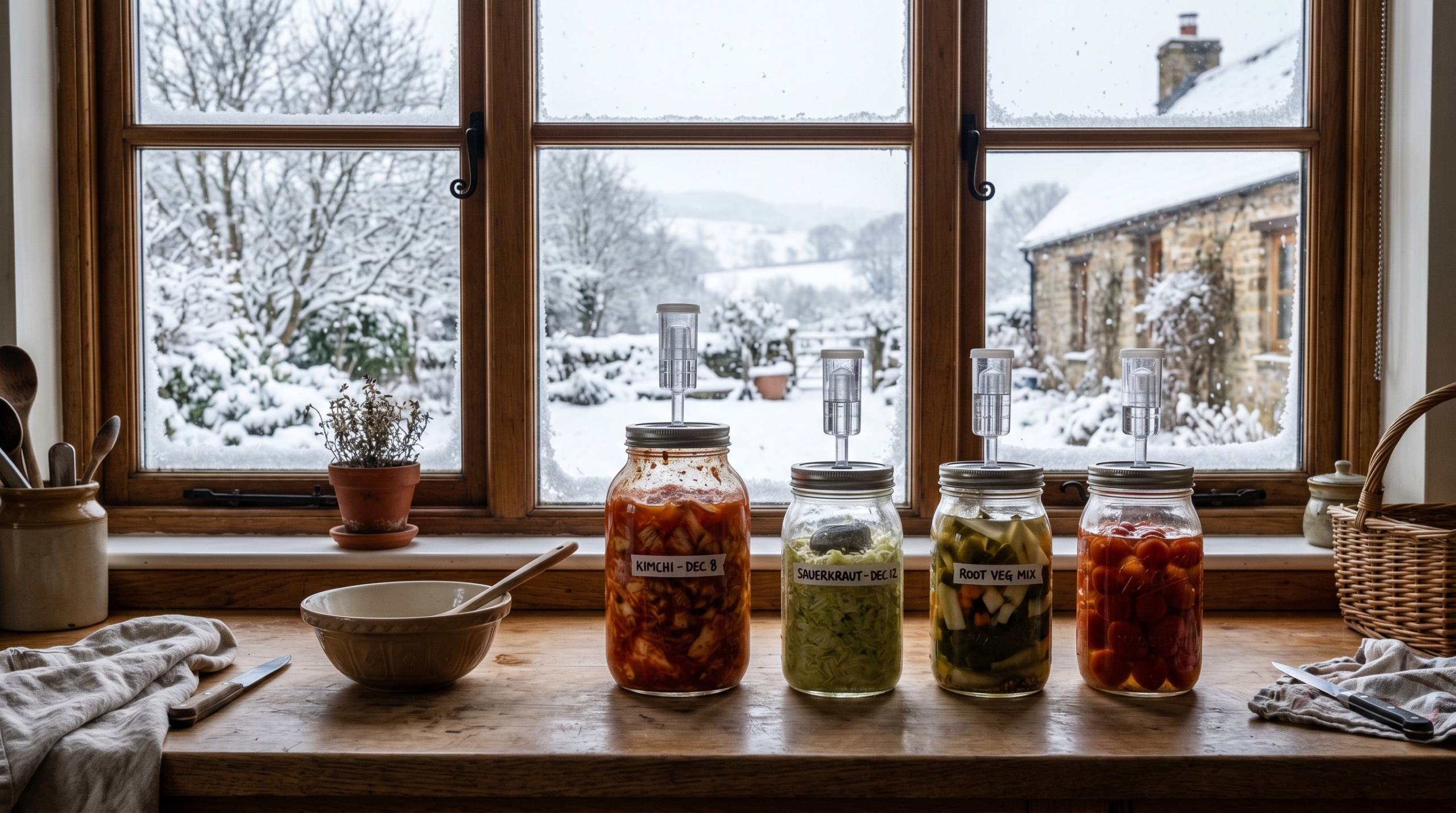
Winter Fermentation — What to Make, What to Expect, and Why It’s My Favourite Season to Ferment
There’s something that feels particularly right about fermentation in winter.
The kitchen is warmer, you’re spending more time indoors, and there’s a quiet satisfaction in having jars of something alive and bubbling away on the counter while it’s cold outside. It connects you to a way of preserving and nourishing that people have relied on for centuries — long before supermarkets made seasonal eating optional.
I genuinely look forward to winter fermentation. It has its own rhythm, its own ingredients, and its opwn rewards. But it also comes with a few things worth knowing if you want consistent results.
Here’s what I’ve learned about fermenting through the colder months.
How Winter Changes the Fermentation Process
Temperature is everything in fermentation, and winter is when that becomes most obvious.
Beneficial bacteria are less active in cold conditions. This means fermentation slows down significantly in winter — what might take 3 to 5 days in summer can take 10 to 14 days or longer when your kitchen is cool. This isn’t a problem. In fact, slower fermentation often produces more complex, developed flavours. But it does mean you need to adjust your expectations and your timing.
The flip side is that winter temperatures also slow the growth of unwanted bacteria, which means your ferments are often more forgiving and less prone to going off quickly. There’s a reason our ancestors relied so heavily on fermentation to preserve food through winter — the cold works in your favour in many ways.
A few practical things to keep in mind for winter fermentation:
Find a consistently warm spot. The top of the fridge, inside a cupboard near the oven, or a dedicated fermentation corner can all work well. Consistency matters more than warmth — a steady cool temperature is better than a spot that swings between warm and cold.
Be patient. Taste your ferments rather than going purely by time. They’re ready when they taste right, not when the calendar says so.
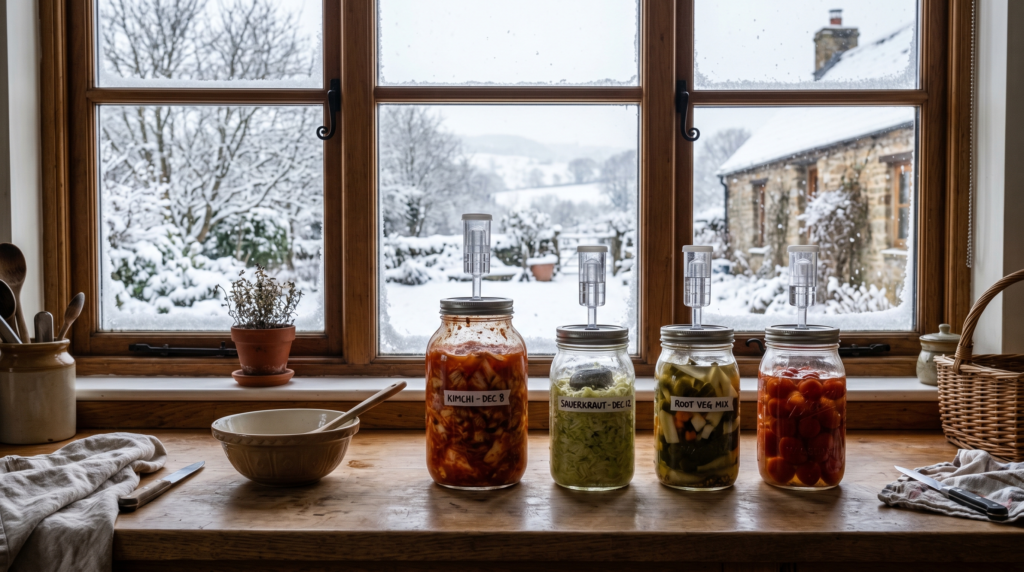
Keep jars away from cold draughts. Window sills that work well in summer can be too cold in winter. Move ferments to a more sheltered spot.
What to Ferment in Winter
Sauerkraut and Kimchi
These are the classic winter ferments for good reason. Cabbage stores well through winter, and both sauerkraut and kimchi actually benefit from a slow, cool fermentation. The flavour develops gradually and becomes wonderfully complex over several weeks.
I make sauerkraut regularly through winter and find it one of the most satisfying ferments to have on hand. It goes with almost everything — alongside eggs in the morning, with soups and stews at lunch, or as a simple side at dinner.
Kimchi is a slightly more involved version with additional vegetables and spices, but the principle is the same. If you haven’t tried making it at home, winter is the perfect time.
Root Vegetable Ferments
Winter is root vegetable season, and most of them ferment beautifully. Carrots, beetroot, turnips, and celeriac all make excellent lacto-fermented vegetables. The process is simple — vegetables, salt, water, and time — and the results are a tangy, probiotic-rich side that brightens up winter meals considerably.
Fermented carrots with ginger and garlic are a particular favourite of mine. They’re ready in about a week, keep for months in the fridge, and have a flavour that’s quite different from anything you’d buy in a shop.
Milk Kefir
If you’re making kefir, winter is actually a great time for it because your kitchen temperature naturally slows the fermentation to a gentle pace. This can produce a milder, creamier kefir than the faster summer ferments. Your grains will still be active — they just work a little more slowly.
On very cold days, you might find your kefir takes closer to 48 hours rather than 24. Just taste it and bottle when it reaches the tanginess you like.
Sourdough Starter
While not a food ferment in the same way, keeping and using a sourdough starter through winter is a natural companion to your fermentation practice. A starter is simply flour and water fermented with wild yeast, and the slow winter fermentation produces bread with a wonderful depth of flavour. If you’ve never kept a starter, winter is a surprisingly good time to begin.
Fermented Garlic Honey
This is a slower ferment that works beautifully started in autumn or early winter and left to develop over several months. Raw garlic cloves are submerged in raw honey and left to ferment slowly at room temperature. The result is sweet, pungent, deeply flavoured garlic that’s wonderful in cooking, and honey that takes on an extraordinary savoury depth.
It requires almost no effort — just patience — and it’s one of those ferments that feels like a real discovery when you first taste it.
Winter Fermentation and Your Health
There’s a certain logic to eating more fermented foods in winter. The shorter days, reduced sunlight, and colder temperatures are exactly the conditions under which immune support becomes most relevant. And as I’ve written about elsewhere on this site, fermented foods are one of the most consistent things you can do to support your gut microbiome — which plays a central role in immune function.
Having a jar of sauerkraut in the fridge, a bottle of kefir on the go, and your L. Reuteri yogurt routine in place through winter means you’re consistently supporting your gut health through the months when it arguably matters most.
It doesn’t need to be complicated. Even one or two fermented foods eaten regularly through winter makes a difference.
The Rhythm of Winter Fermentation
One of the things I love about fermenting through the colder months is that it encourages a slower, more considered approach to food. You’re working with seasonal ingredients, you’re being patient, and you’re producing something that genuinely nourishes you.
There’s a reason fermentation has been part of every traditional food culture through history — and winter, more than any other season, is when you feel most connected to that tradition.
Start one thing this winter. A jar of sauerkraut, a batch of fermented carrots, or a kefir culture. Get comfortable with it. And see where it takes you.
If you’re new to fermentation and not sure where to begin, my beginner’s guide to fermentation is a good starting point. And if you’re already making L. Reuteri yogurt or kefir, adding a simple vegetable ferment this winter is a natural next step.