
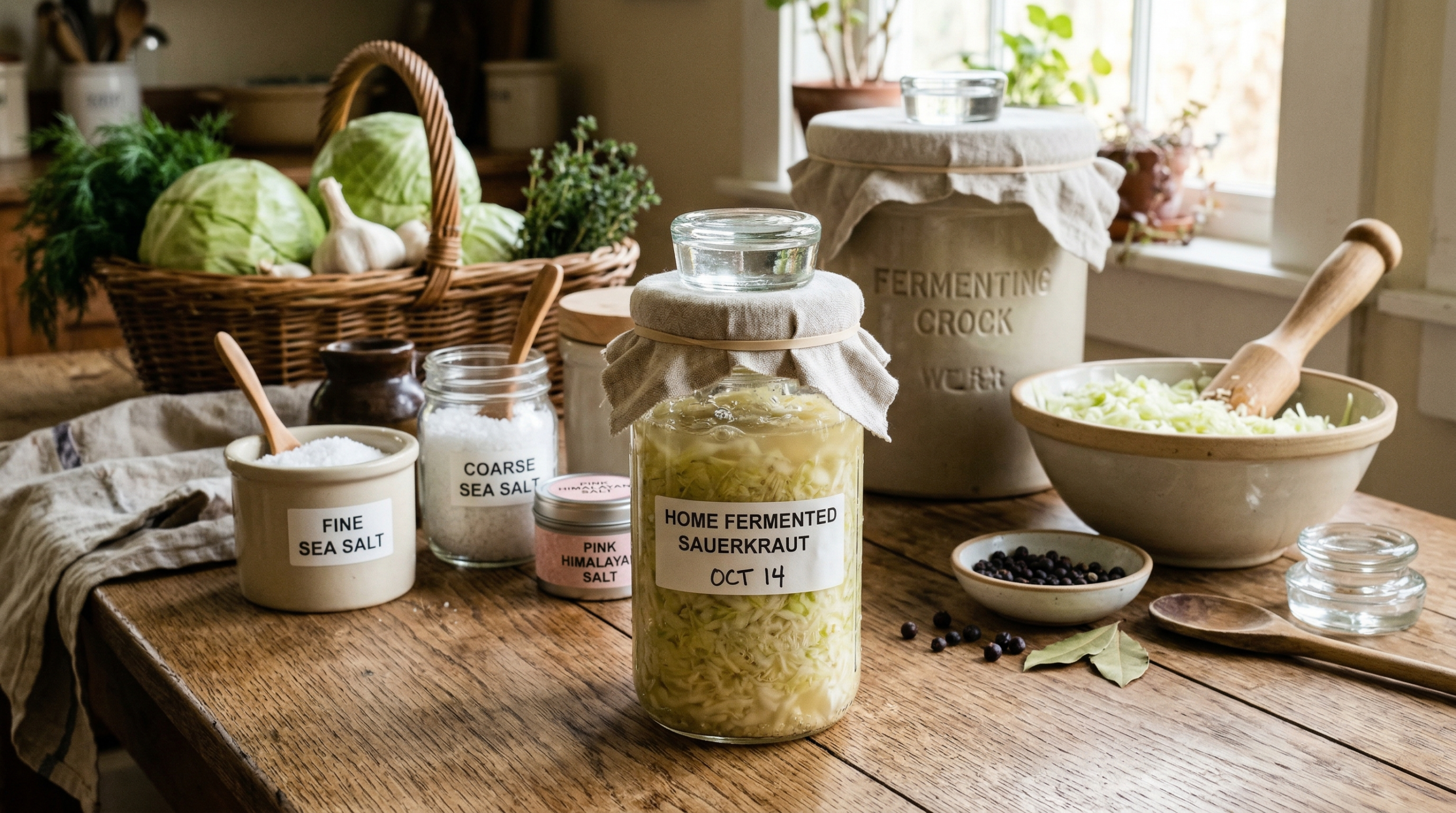
What is the correct salt ratio for fermentation?
The correct salt ratio for fermentation is typically between 2% and 3% of the weight of your vegetables. This range creates the ideal environment for beneficial bacteria while preventing harmful microbes from growing.
Getting the salt level right is one of the most important parts of successful fermentation. Too little salt can lead to spoilage, while too much can slow down or stop the fermentation process.
Quick Guide to Fermentation Salt Ratios
- 2% salt → faster fermentation, softer texture
- 2.5% salt → balanced (best for most vegetables)
- 3% salt → slower fermentation, firmer texture
New to fermentation? Start here:
If you’ve started fermenting at home, there’s a good chance you’ve already run into this question:
“How much salt am I actually supposed to use?”
It sounds like a small detail, but it’s the one thing that trips most people up at the start.
You’ll see different recipes saying different things — a teaspoon here, a tablespoon there, sometimes percentages, sometimes not. Before long, it starts to feel like you need a chemistry degree just to make a jar of sauerkraut.
The reality is much simpler than that.
Once you understand one basic principle, everything starts to make sense, and you can stop guessing every time you start a new ferment.
What Is the Ideal Salt Ratio for Fermentation?
Most vegetable fermentation comes down to one simple rule:
Use around 2% salt by weight.
That’s it. That’s the foundation.
So what does that actually mean in practice?
If you have 1 kilogram of vegetables, you use 20 grams of salt.
If you have 500 grams, you use 10 grams.
It’s a simple ratio, but it does a lot of heavy lifting.
Salt creates the environment that allows fermentation to happen safely. It slows down the bad bacteria and gives the beneficial bacteria a chance to take over. Without enough salt, things can go off track pretty quickly.
At the same time, you don’t need to be perfect down to the decimal. If you’re close to that 2% mark, you’re going to be fine. This isn’t something you need to overthink.
Once you’ve done it a couple of times, it becomes second nature.
Why Salt Matters More Than You Think
Salt Ratio Quick Guide
- 500g vegetables → 10g salt
- 1kg vegetables → 20g salt
- 1 litre water → 20–30g salt
It’s easy to think of salt as just something that adds flavour, but in fermentation, it’s doing much more than that.
When you add salt to vegetables, it starts drawing water out of them. That’s what creates the brine. That liquid is what keeps everything submerged and protected.
At the same time, salt slows down unwanted microbes and helps create the conditions where beneficial bacteria can thrive.
That’s what turns a jar of cabbage into sauerkraut instead of a spoiled mess.
So while it might seem like a small detail, getting the salt right is what makes the whole process work.
Dry Salt Method (Best for Sauerkraut)
If you’re making something like sauerkraut, you don’t need to add water at all.
You just take your vegetables — usually cabbage — and mix the salt directly into them.
As you massage the salt into the cabbage, it starts to soften and release liquid. That liquid becomes your brine.
A simple example:
- 1kg of cabbage
- 20g of salt
That’s all you need.
Once it’s mixed and packed into a jar, you press it down so the liquid covers everything. From there, fermentation takes care of itself.
If you haven’t done this before, it’s worth following a proper step-by-step guide alongside it. You can walk through it here:
How to Make Sauerkraut at Home
It’s one of the easiest and most reliable ways to get started.
Brine Method (For Most Other Vegetables)
When you’re working with vegetables that don’t release as much liquid — things like cucumbers, carrots, or peppers — you’ll usually use a saltwater brine instead.
This is just water with salt dissolved into it.
A good starting point is:
2% to 3% salt solution
That works out to roughly:
- 20 to 30 grams of salt per litre of water
If you go on the lower end, fermentation tends to move a bit faster. If you go slightly higher, things slow down and become a bit more controlled.
Either way works. It just depends on what you’re making and how quickly you want it to develop.
The key thing here is making sure everything stays submerged under the brine. That’s what keeps it safe.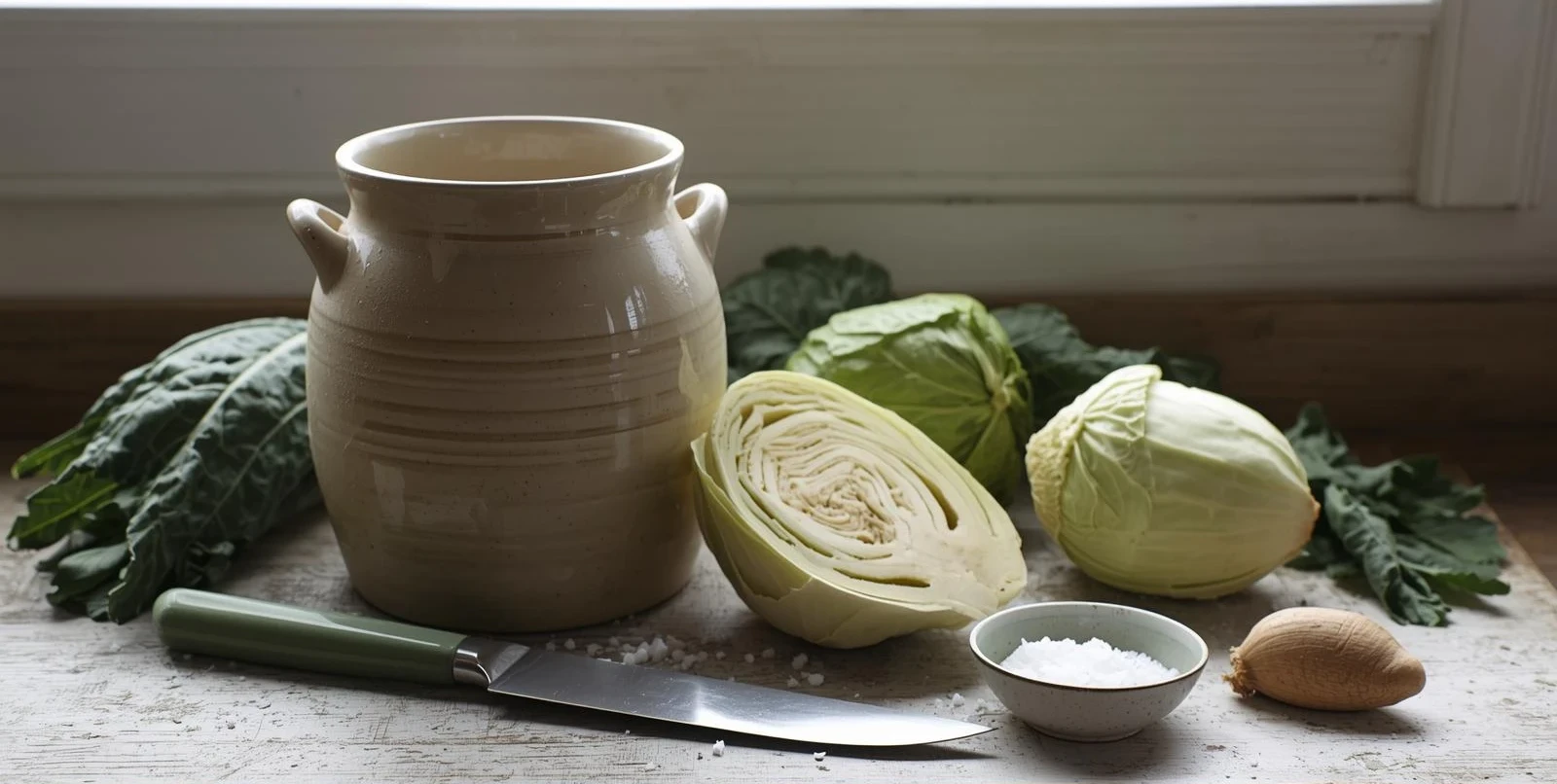
A Simple Way to Remember It
If you don’t want to think about percentages every time, just remember this:
- 1kg vegetables = 20g salt
- 1 litre water = 20–30g salt
That’s enough to cover most situations you’ll run into.
You don’t need complicated charts or exact measurements every time. Just get close and you’ll be fine.
Common Mistakes with Salt
Most problems people run into with fermentation come back to salt in one way or another.
Here are a few to watch out for.
Not using enough salt
This is the biggest issue, especially for beginners.
If the salt level is too low, you’re not creating the right environment for fermentation. That’s when you’re more likely to run into spoilage or off smells.
If something goes wrong early on, this is usually the first thing to look at.
Using too much salt
Too much salt doesn’t usually ruin a ferment, but it can slow things down a lot.
You might end up with something that takes longer to develop flavour or tastes overly salty at the end.
It’s not dangerous, just not ideal.
Using iodized salt
Regular table salt often contains iodine and anti-caking agents. These can interfere with the fermentation process.
It’s better to use:
- Sea salt
- Rock salt
- Pickling salt
You don’t need anything fancy, just something clean and without additives.
Guessing instead of measuring
When you’re starting out, it’s worth being a bit more precise.
Eyeballing salt can work once you’ve got experience, but early on it’s easy to get it wrong.
A simple kitchen scale makes things much easier and removes the guesswork.
What If You Get It Wrong?
This is something a lot of people worry about, but it’s not as fragile as it seems.
If you’re a little under or over on salt, your ferment will usually still work.
Fermentation has a way of balancing itself out, as long as you’re in the right general range.
If something really does go wrong, you’ll know. It won’t smell right, and it won’t be something you’d want to eat.
That’s where basic safety comes in, which you can read more about here:
Fermentation Safety Tips
But most of the time, if you stick close to the 2% rule, things turn out just fine.
A Few Common Questions
Can I use less salt for health reasons?
You can reduce it slightly, but going too low increases the risk of problems. It’s better to stay close to the standard ratio, especially while you’re learning.
Do I always need to measure exactly?
At the start, yes. It helps you understand how things work. Later on, you’ll get a feel for it and won’t need to be as precise.
Is 2% always the rule?
It’s a reliable baseline for most vegetable ferments. Some recipes vary slightly, but this is a solid place to start.
Where to Go Next
Now that you understand salt ratios, the next step is just putting it into practice.
If you haven’t already, start with something simple:
- Beginner’s Guide to Fermentation
- How to Make Sauerkraut at Home
- Fermentation Safety Tips
Once you’ve done a couple of batches, this will all feel much more straightforward.
Final Thoughts
Salt is one of those things that seems complicated at first, but really isn’t once you break it down.
You don’t need to memorise a bunch of different rules or follow complicated formulas.
Just stick with the basics:
- Around 2% for vegetables
- Around 2–3% for brine
That’s enough to get consistent, reliable results.
From there, it just becomes practice. The more you do it, the more comfortable it feels, and the less you need to think about it.
And that’s really the goal with fermentation — keeping it simple enough that you actually keep doing it.
Where to Go Next
Now that you’ve got your salt ratios sorted, the next step is putting it into practice.
Start here: