

Best Containers for Storing Homemade Yogurt (What Works Best for Freshness and Convenience)
Making homemade yogurt is one thing.
Storing it properly so it stays fresh, thick, and easy to use is the next step.
A lot of people put effort into making a good batch, then store it in whatever container is nearby.
That can lead to:
- messy fridge storage
- repeated opening of one large tub
- faster texture decline
- inconvenience
I found that once I switched to the right containers, homemade yogurt became much easier to keep as a regular habit.
This guide covers the best containers for storing homemade yogurt, what to look for, and which type suits different needs.
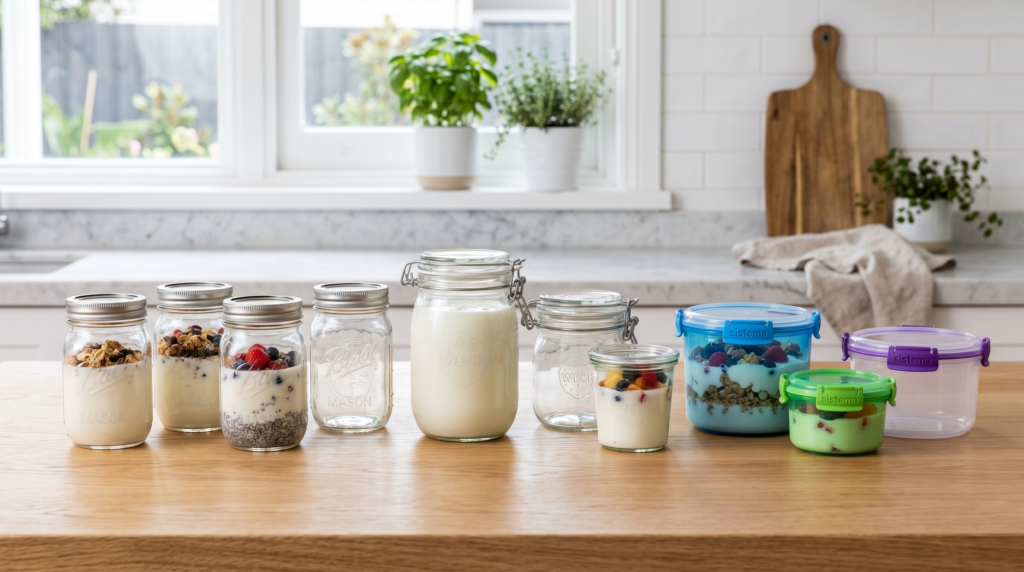
What Are the Best Containers for Storing Homemade Yogurt?
The best containers for storing homemade yogurt are usually airtight glass jars, small portion containers, or high-quality BPA-free containers with secure lids.
The best choice depends on convenience, portion size, and personal preference.
Why Containers Matter More Than People Think
Good containers help with:
- freshness
- texture retention
- portion control
- easier meal prep
- cleaner fridge organisation
- reduced contamination from repeated scooping
Simple upgrades can make homemade yogurt much easier to maintain.
Best Container Types for Homemade Yogurt
1. Glass Mason Jars
Best Overall
Great for:
- freshness
- reusable storage
- seeing contents clearly
- fridge organisation
I especially like smaller jar sizes for portions.
2. Weck Jars
Best Premium Glass Option
Excellent if you like attractive storage and durable glass containers.
3. Sistema To Go Containers
Best Plastic Option
Good for:
- lightweight storage
- portability
- lunch bags
- kids lunches
4. Pyrex Glass Storage Containers
Best Multi-Use Option
Great if you also want containers for leftovers and meal prep.
5. Small Reusable Yogurt Pots
Best for Daily Portions
Perfect for grab-and-go servings.
My Preferred Method
I prefer:
one main batch container
plus
several smaller serving jars
That keeps the bulk yogurt untouched longer and makes daily use easier.
Glass vs Plastic
Glass Pros
- doesn’t absorb smells
- easy to clean
- durable feel
- great for freshness
Plastic Pros
- lighter
- less breakable
- travel friendly
Both can work well if quality is good.
What Size Is Best?
For most people:
- 200–300 mL small jars = single servings
- 500 mL jars = medium use
- 1 L+ container = batch storage
A mix often works best.
What I Avoid
- lids that don’t seal well
- containers hard to clean
- giant tubs opened constantly
- damaged plastic
Frequently Asked Questions
Is glass better than plastic for yogurt?
Many people prefer glass, but both can work.
Can I store yogurt in mason jars?
Yes, they are one of the best options.
How long does yogurt last in jars?
Usually similar to other sealed containers when refrigerated.
Should I portion it out?
Often more convenient.
What size jar is best?
Single-serving jars are very practical.
Quick Comparison Table
| Container Type | Best For | Main Benefit |
|---|---|---|
| Mason Jars | Overall use | Freshness + reusable |
| Weck Jars | Premium storage | Stylish + durable |
| Plastic Containers | Portability | Lightweight |
| Pyrex | Multi-use | Versatile |
| Small Pots | Daily servings | Convenience |
Where to Go Next
If you’re building a yogurt routine, these help:
- How to Store L. Reuteri Yogurt in the Fridge
- Can You Freeze L. Reuteri Yogurt?
- Best Ways to Flavour L. Reuteri Yogurt
- Best Yogurt Makers for L. Reuteri Yogurt
- Best Milk for L. Reuteri Yogurt
Final Thoughts
The best container is the one that keeps yogurt fresh and makes daily use easy.
For many people, that means airtight glass jars and smaller portion sizes.
Small storage upgrades often make healthy habits easier to keep.