

How to Make Homemade Yogurt for Beginners (Easy Step-by-Step Guide)
Homemade yogurt sounds harder than it really is.
A lot of people imagine special equipment, complicated temperatures, or a process that can easily go wrong. The truth is, once you understand the basics, making yogurt at home is simple, affordable, and surprisingly rewarding.
I still think one of the biggest benefits is control. You choose the milk, the ingredients, the thickness, and the flavour. No unnecessary additives, no mystery ingredients, and no paying premium prices for small tubs at the store.
If you’ve never made yogurt before, this beginner guide will walk you through the easiest way to start, what you need, common mistakes to avoid, and how to get thick creamy results.
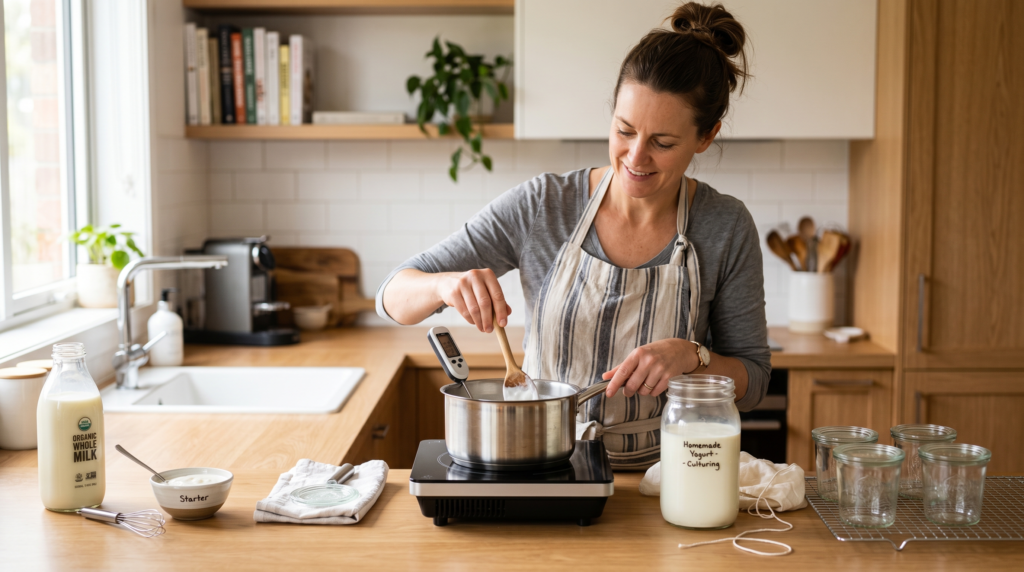
Why Make Homemade Yogurt?
People usually start for one of four reasons:
- to save money over time
- to control ingredients
- to avoid added sugars or fillers
- to enjoy fresh yogurt that tastes better
Once you make a few successful batches, it often becomes a regular kitchen habit.
What You Need to Make Homemade Yogurt
The basic process is simple.
Ingredients
- 1 litre (or quart) milk
- 2 tablespoons plain yogurt with live cultures or a starter culture
Equipment
- saucepan
- thermometer (very helpful)
- clean jar or container
- whisk or spoon
- warm place to incubate
Optional but useful:
- yogurt maker
- glass jars
- strainer for thicker yogurt
What Is the Easiest Milk to Use?
For beginners, full-fat milk is usually the easiest place to start.
Why?
- creamier texture
- thicker results
- more forgiving than low-fat milk
Whole milk tends to give better first-batch success than skim milk.
Step-by-Step: How to Make Homemade Yogurt
Step 1: Heat the Milk
Pour the milk into a saucepan and slowly heat it to around 82°C (180°F).
This helps improve final texture.
Stir occasionally to prevent scorching.
Step 2: Cool the Milk
Remove from heat and let it cool to around 43–46°C (110–115°F).
Too hot can damage starter cultures.
Too cool may slow fermentation.
Step 3: Add the Starter
Place your yogurt starter in a small bowl.
Add a little cooled milk first and mix smooth, then stir it back into the pot.
This helps prevent lumps.
Step 4: Incubate Warm
Pour into jars or container and keep warm for 6 to 10 hours.
Good options:
- yogurt maker
- oven with light on
- insulated cooler
- warm stable spot
The longer it ferments, the tangier it usually becomes.
Step 5: Chill
Once set, refrigerate for at least 6 hours before eating.
This improves texture significantly.
How to Make It Thicker
If you want thicker yogurt:
- use full-fat milk
- ferment a little longer
- strain through cheesecloth or yogurt strainer
- add milk powder before heating (optional)
My Honest Beginner Advice
Don’t chase perfection on batch one.
Your first goal should be:
edible, set yogurt
Once you achieve that, thickness and fine-tuning become much easier.
Many beginners quit because they expect store-bought perfection immediately.
Common Beginner Mistakes
Using Too Much Starter
More starter is not always better.
Wrong Temperature
This causes many failures.
Moving It Constantly
Let it sit undisturbed.
Judging Before Chilling
Fresh warm yogurt can seem thinner than it will after refrigeration.
How Long Does Homemade Yogurt Last?
Usually best enjoyed within 5–7 days when refrigerated in clean sealed containers.
Ways to Flavour Homemade Yogurt
Add after fermentation:
- berries
- banana
- honey
- vanilla
- cinnamon
- nuts
- cocoa powder
Frequently Asked Questions
Do I need a yogurt maker?
No. It helps, but many people make yogurt without one.
Here are some budget yogurt makers I recommend
Can I use store-bought yogurt as starter?
Yes, if it contains live cultures.
Why is mine runny?
Often temperature or fermentation time.
Is homemade yogurt cheaper?
Often yes over time.
Can I freeze it?
Yes, though texture may change.
Quick Beginner Method Summary
| Heat milk | 82°C / 180°F |
| Cool milk | 43–46°C / 110–115°F |
| Add starter | Mix gently |
| Incubate | 6–10 hours warm |
| Chill | 4+ hours |
Where to Go Next
If you enjoyed this, these will help
- Best Yogurt Makers for Beginners
- Beginner’s Guide to Fermentation
- How to Ferment Vegetables at Home
- How to Store Fermented Foods
- 10 Best Toppings for Homemade Yogurt
Final Thoughts
Making homemade yogurt is one of those skills that seems harder than it is.
Once you do it once or twice, it becomes simple.
Start basic, keep temperatures steady, and don’t expect perfection immediately.
That’s how most people go from curious beginner to making yogurt regularly.