
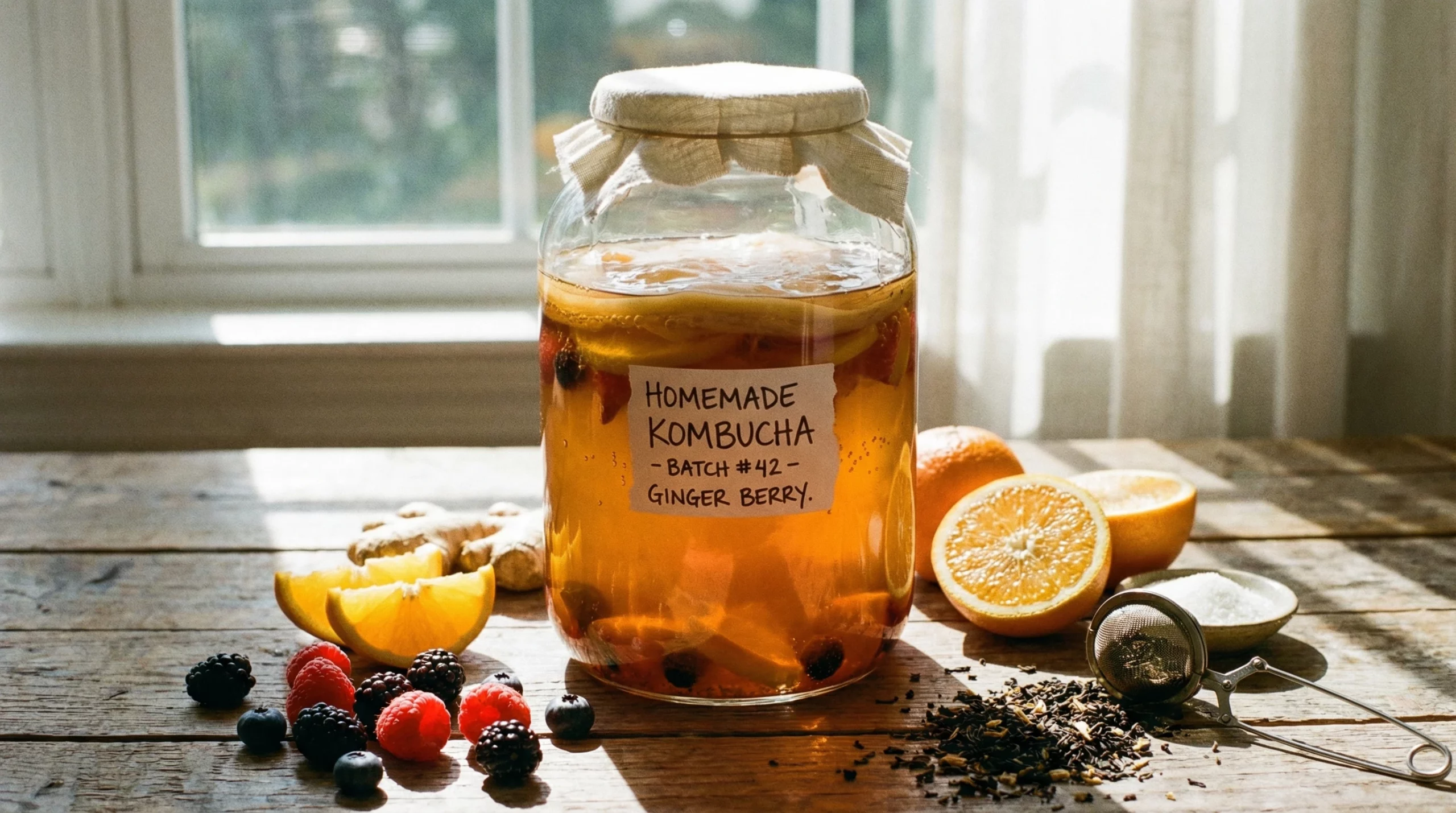
Kombucha has gone from something you’d only see in health food stores to something that’s now everywhere — supermarkets, cafés, and even people’s kitchens.
It’s usually described as “good for your gut,” but that doesn’t really tell you much.
What actually matters is when it helps and what you’ll notice.
For me, kombucha started as a replacement for sugary drinks. I wasn’t expecting much beyond that, but over time I noticed it worked best in certain situations — especially when my digestion felt off or when I’d been eating less than ideal.
In this post, I’ll break down what kombucha actually does, what the latest research suggests, and where it realistically fits into your routine.
Do the Health Benefits of Kombucha Actually Matter?
Kombucha can support gut health, provide antioxidants, and offer a lower-sugar alternative to soft drinks, but its effects are generally mild and build over time. It works best as part of a consistent routine rather than a quick fix.
What Is Kombucha (And Why People Drink It)
Kombucha is tea that’s been fermented using a culture of bacteria and yeast (often called a SCOBY).
During fermentation:
- sugar is broken down
- beneficial acids are produced
- small amounts of live bacteria develop
The end result is a slightly fizzy, tangy drink that sits somewhere between a soft drink and a fermented food.
From what I’ve seen, most people don’t start drinking kombucha for the science — they start because they want a better alternative to sugary drinks, and then the health side becomes a bonus.
Gut Health Support (Where Kombucha Actually Helps)
Kombucha contains live bacteria created during fermentation, which can support the balance of your gut microbiome.
That sounds good in theory — but where does it actually help?
From my experience, kombucha is most noticeable when digestion feels slightly off. That could be after heavier meals, periods of inconsistent eating, or when you’ve been relying more on processed foods than usual.
It’s not a fix-all, but it’s an easy way to introduce beneficial bacteria without having to completely change your diet.
Research in recent years suggests kombucha may support gut diversity in healthy adults, but the effects are gradual rather than immediate.
The key benefit is consistency, not intensity.
Antioxidants and Overall Health
Because kombucha is made from tea, it naturally contains antioxidants.
These compounds help protect your cells from oxidative stress, which plays a role in ageing and overall health.
Fermentation may enhance some of these compounds, although the exact impact varies depending on the type of tea and how it’s made.
In practical terms, this isn’t something you’ll “feel” straight away — it’s more of a long-term background benefit.
Blood Sugar and Energy Levels
Some newer research suggests kombucha may help support blood sugar balance when it replaces higher-sugar drinks.
This is where I think kombucha is most useful in real life.
If you’re swapping it for soft drinks or sugary juices, you’re reducing sugar intake while still getting something that feels like a treat.
That alone can make a noticeable difference over time.
Hydration (An Easy Win Most People Overlook)
At the end of the day, kombucha is mostly water.
So while people focus on probiotics and acids, one of the simplest benefits is:
it helps you drink more fluids
For anyone who struggles with plain water, kombucha can make hydration easier without relying on sugary drinks.
Things to Watch Out For
Kombucha isn’t a magic solution, and there are a few things worth paying attention to:
Sugar Content
Some brands are surprisingly high in sugar.
Look for lower sugar options where possible
Alcohol Content
Most kombucha contains very small amounts of alcohol, but some varieties contain more
Always check the label if this matters to you
Digestive Adjustment
If you’re new to kombucha, start slowly
some people notice mild bloating at first
Homemade vs Store-Bought Kombucha
Both options have their place.
- Store-bought → convenient and consistent
- Homemade → more control and often lower cost
I started with store-bought, then experimented with making my own once I understood what to expect.
If you’re just getting started, keeping things simple usually works best.
Where Kombucha Fits Into a Routine
From what I’ve seen, kombucha works best when:
- used regularly (not occasionally)
- treated as a replacement, not an addition
- part of a generally balanced diet
It’s not something that will transform your health overnight, but it can be a useful piece of the bigger picture.
Where to Go Next
If you’re interested in gut health or fermentation, these will help:
- 👉 Beginner’s Guide to Fermentation (start here)
- 👉 Using Weights and Airlocks in Fermentation (for better results)
- 👉 Best Prebiotics for L. Reuteri Yogurt (for deeper gut support)
Final Thoughts
Kombucha isn’t a miracle drink, but it does have a place.
The biggest benefits come from:
- consistency
- replacing less healthy options
- using it as part of a wider approach to health
Once you look at it that way, it becomes a simple, practical addition rather than something overhyped.