
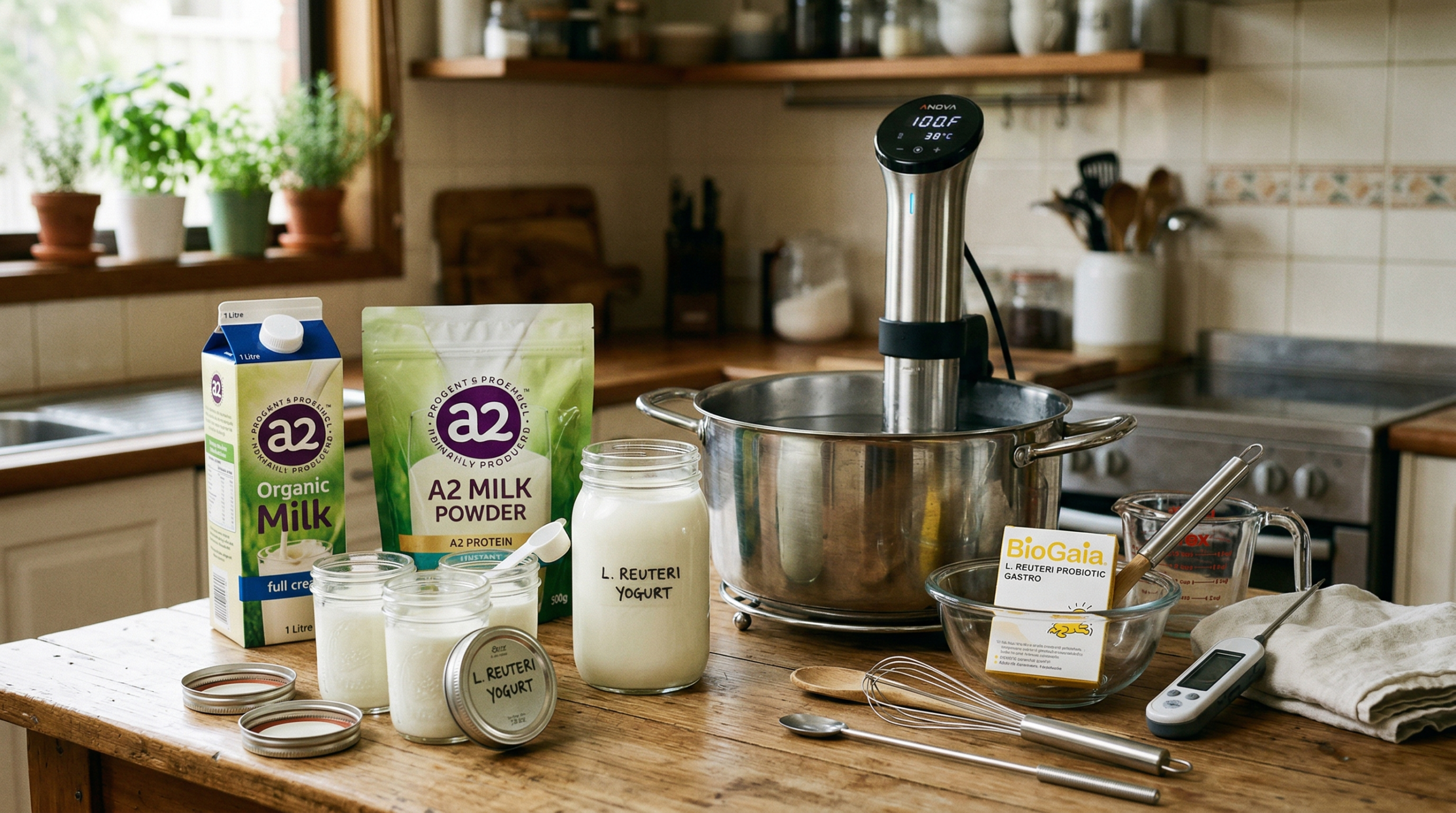
L. Reuteri Yogurt Recipe for Beginners (Simple, Safe, and Consistent)
If you’ve been looking into gut health, chances are you’ve come across L. reuteri yogurt. It’s gained a lot of attention as a homemade probiotic food, and for good reason — it’s simple to make, cost-effective, and gives you full control over what goes into it.
I started making this yogurt as a practical alternative to buying probiotic supplements. What I found pretty quickly is that while the recipe itself is straightforward, getting consistent results comes down to a few key details — mainly temperature, timing, and the quality of your starter.
In this guide, I’ll walk you through exactly how to make L. reuteri yogurt at home, along with the common mistakes to avoid and what you should realistically expect.
What Is L. Reuteri Yogurt?
L. reuteri yogurt is a fermented dairy product made using a specific strain of probiotic bacteria called Lactobacillus reuteri. Unlike standard yogurt, which is typically fermented for 6–8 hours, this version is usually cultured for much longer often around 24 to 36 hours.
This extended fermentation allows the bacteria more time to multiply, which is why many people are interested in making it at home rather than relying on store-bought options.
Why People Make L. Reuteri Yogurt at Home
There’s a lot of interest in this type of yogurt, mainly because it gives you a way to include fermented foods in your diet without additives or unnecessary ingredients.
L. reuteri itself has been studied for its potential role in digestion and gut balance. That said, responses can vary from person to person, and it’s best to view this as part of a broader approach to nutrition rather than a quick fix.
From a practical standpoint, making it at home is:
- More affordable than buying probiotic products long-term
- Easy once you understand the process
- Adjustable based on your preferences
My Experience Making This Yogurt
When I first tried making L. reuteri yogurt, my results were inconsistent. Some batches turned out thick and creamy, while others were runny or didn’t ferment properly at all.
The biggest difference came down to controlling temperature and being consistent with the process. Once I dialled that in, it became very reliable.
If you’re new to this, expect a bit of trial and error at the start — that’s completely normal.
This is the exact method I use to make L.reuteri yogurt. I’ve made this many times and regularly include it in my diet.
Important Note Before You Start
This recipe is based on personal use and general nutrition principles. It’s not intended as medical advice. If you have underlying health conditions or digestive issues, it’s a good idea to speak with a qualified professional before making significant changes to your diet.
Ingredients You’ll Need
To keep things simple, you only need a few ingredients:
- 2 litres (or 2 quarts) of full-fat A2 milk
- L. reuteri starter (either a probiotic supplement or a previous batch)
- 1 teaspoon of prebiotic fibre (such as inulin, optional but commonly used)
- Half a cup of A2 milk powder
I personally use A2 milk because I find it easier to digest and it produces a smoother texture, but standard full-fat milk can also be used.
I use a specific starter culture for this — you can see the best options here.
Equipment (What Actually Matters)
You don’t need anything complicated, but one thing is essential:
- A way to maintain a stable low temperature (around 36–38°C / 97–100°F)
This can be:
- A yogurt maker
- A sous vide setup
- An oven with a light on (less reliable, but works for some people)
Consistency here is what makes or breaks the recipe.
Using a proper yogurt maker makes a big difference — here’s what I recommend.https://fermentandthrive.com/best-yogurt-makers-for-l-reuteri-yogurt-tested-setup-for/
Step-by-Step Instructions
1. Prepare the Milk
Pour your milk into a clean container. Some people gently heat it first and let it cool, but if you’re using pasteurised milk, you can usually skip this step.
2. Add the Starter
Add your probiotic or add your starter culture directly to the milk. Mix thoroughly so it’s evenly distributed.
3. Add Prebiotic Fibre (Optional)
I also add a small amount of prebiotic fibre — here are the ones I use.
4. Incubate
Place the mixture in your yogurt maker or controlled environment and keep it at a steady temperature (around 36–38°C).
Let it ferment for 24–36 hours.
5. Chill and Set
Once fermentation is complete, transfer the yogurt to the fridge. It will continue to thicken as it cools.
What to Expect (Taste and Texture)
This yogurt is different from standard store-bought yogurt.
- Texture: Can range from creamy to slightly thinner depending on your process
- Taste: Mildly tangy, sometimes slightly different depending on fermentation time
- Consistency improves as you refine your method
If your first batch isn’t perfect, don’t worry — most people improve quickly after a couple of attempts.
Common Mistakes to Avoid
This is where most beginners go wrong.
Temperature Too High
If it gets too hot, you can kill the bacteria. This is one of the most common reasons for failure.
Temperature Too Low
If it’s too cool, fermentation may not happen properly, leaving you with thin or ineffective yogurt.
Poor Starter Quality
Not all probiotic supplements are equal. If your starter isn’t viable, the yogurt won’t culture properly.
Inconsistent Timing
Cutting fermentation short can lead to weak results. Let it run its full course.
Contamination
Always use clean equipment. Unwanted bacteria can ruin a batch quickly.
Is L. Reuteri Yogurt Safe?
When prepared correctly, homemade yogurt is generally safe. However, because this recipe involves fermenting bacteria over an extended period, hygiene and temperature control are important.
If you notice:
- Unusual smells
- Discolouration
- Visible mould
It’s best to discard the batch and start again.
When in doubt, throw it out.
How to Store It
Store your yogurt in an airtight container in the fridge.
- It will usually last around 1–2 weeks
- You can use a small portion as a starter for your next batch
This makes it even more cost-effective over time.
Can You Use This as a Starter for Future Batches?
Yes — and this is one of the biggest advantages.
Once you’ve made a successful batch, you can use a portion of it to culture your next one. This often produces better results over time as the culture becomes more stable.
Final Thoughts
L. reuteri yogurt is one of those things that looks complicated at first but becomes very straightforward once you’ve done it a couple of times.
The key takeaway is this:
Control your temperature, be consistent, and keep things clean.
Don’t expect perfection on your first try — but once you dial it in, it becomes a simple, repeatable process that fits easily into your routine.
FAQ (SEO + Featured Snippet Ready)
How long does L. reuteri yogurt take to make?
Most batches are fermented for around 24–36 hours. Longer fermentation gives the bacteria more time to develop, but results can vary depending on your setup.
Why is my L. reuteri yogurt runny?
This is usually caused by low temperature, weak starter culture, or insufficient fermentation time.
Do I need a yogurt maker?
Not strictly, but it makes the process far more reliable by maintaining a consistent temperature.
Can I use store-bought yogurt as a starter?
Not for L. reuteri specifically — you need a culture that contains that strain.